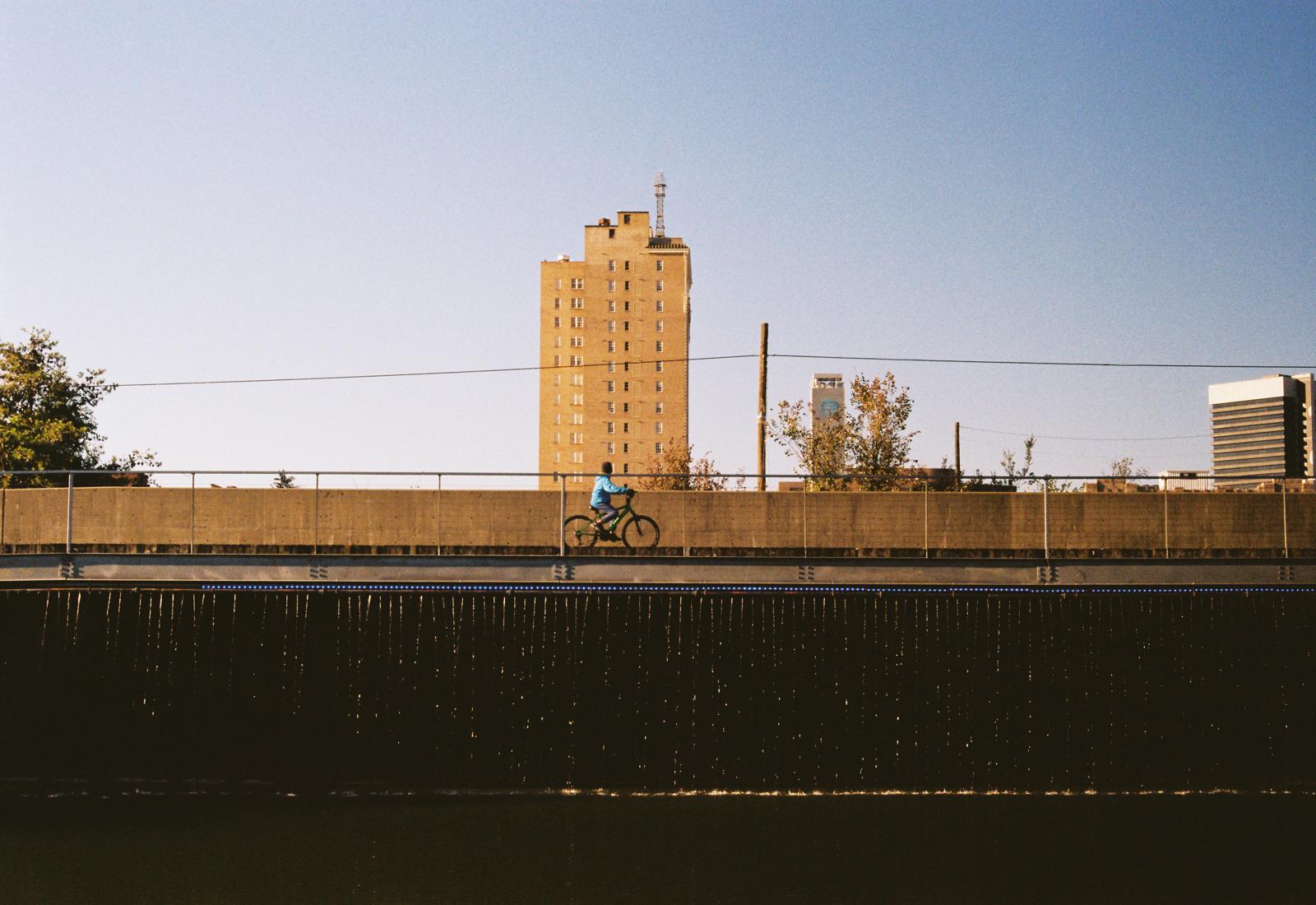
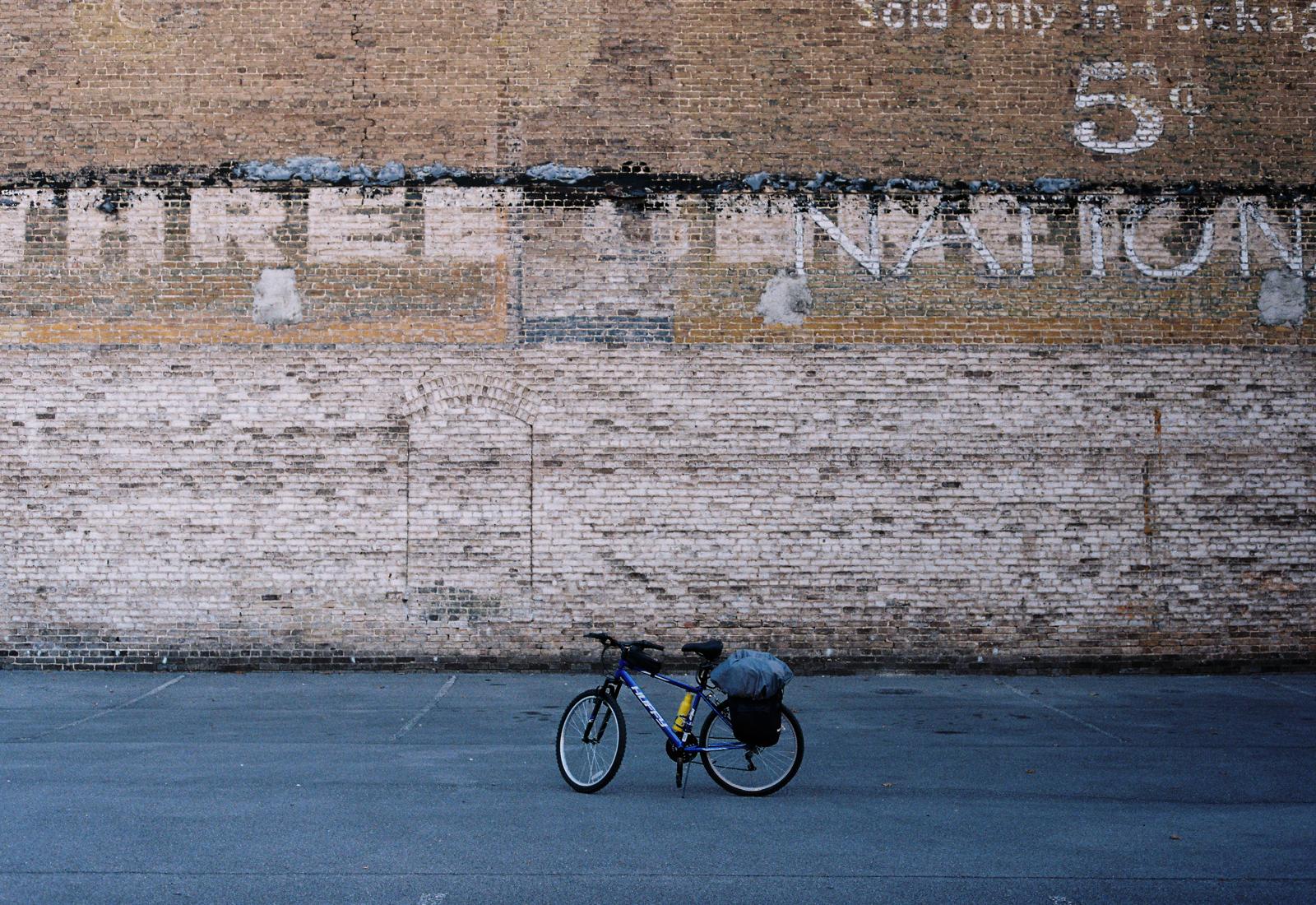
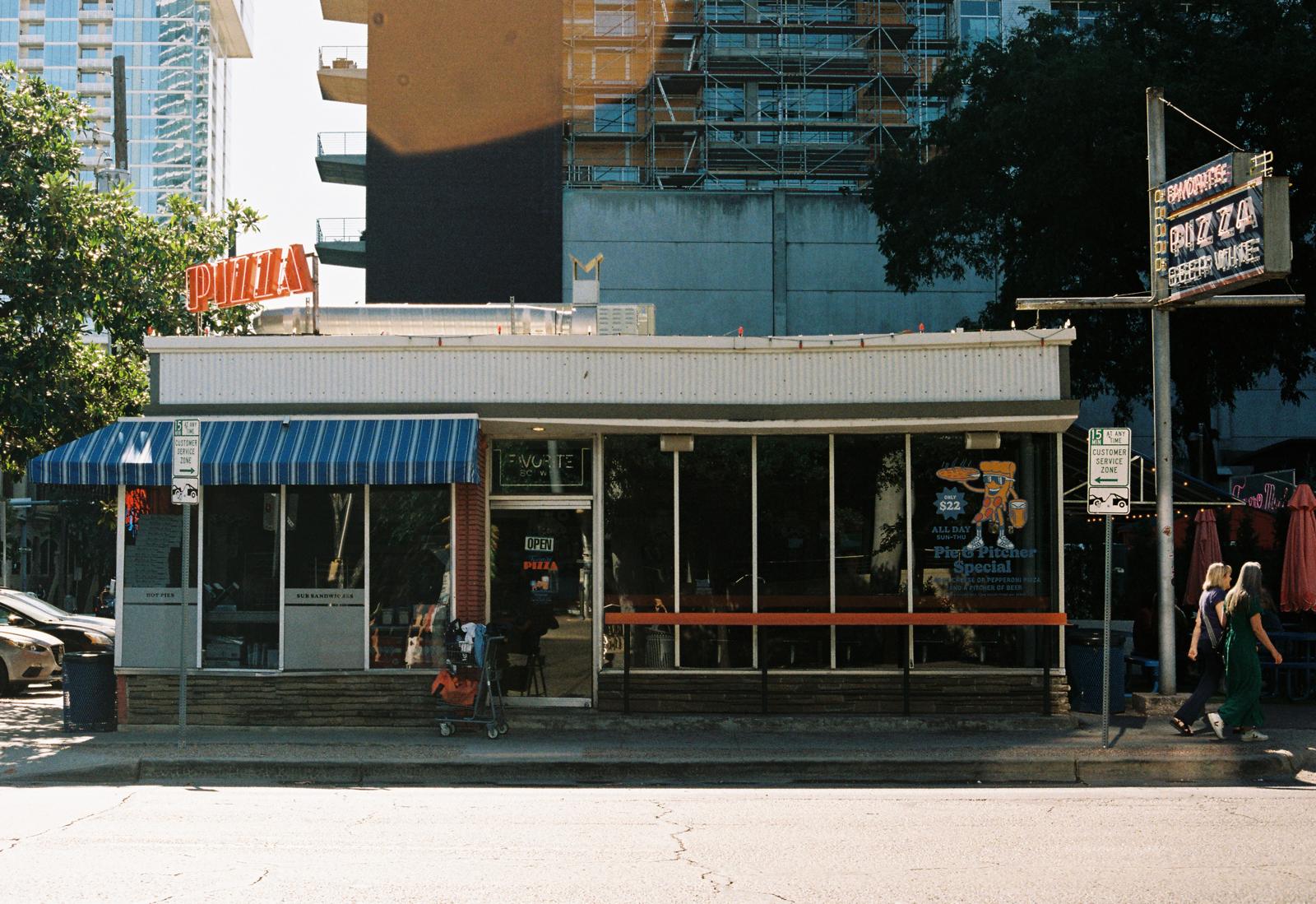
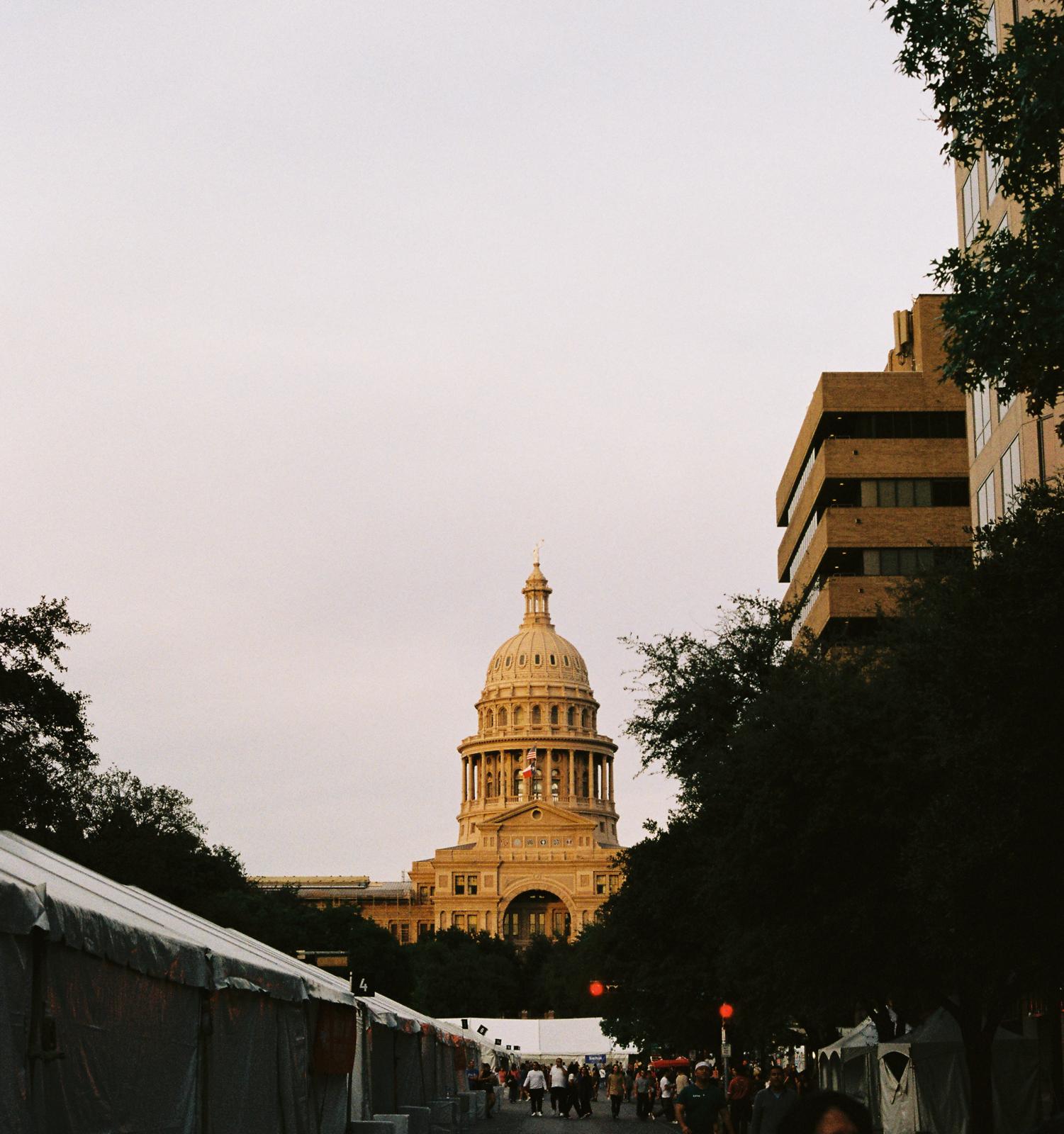
To give you an idea, here is how the first day of owning a bike went. It started off well when, on my first proper travel day from New Orleans to Birmingham, I almost lost my bike completely. I had arrived at the station 30 minutes in advance, instead of the 60 minutes recommended on my ticket. Upon arriving, I was immediately told that they would no longer be able to load my bike onto the train.
“You’re too late,” the Amtrak employee behind the counter told me. She was speaking to me through a plastic shield, one of the few artifacts to remind us of the Covid pandemic not too long again. At this point I was too tired, sweaty and dehydrated from lugging my heavy baggage around to really make much of a point (nobody had even boarded at that point), and besides it was on me for arriving too late. I attempted to plead, but I could tell that my heart wasn’t quite into it. I had no case to stand on and besides, I had just learned that Amtrak employees are already overworked enough as is so it seemed unfair adding more pressure to an already underappreciated employee. So when I was made to choose between rebooking my ticket to a train the day after or getting on today but letting them put the bike on the next Birmingham-bound train, I gave in and chose for the latter. I was to arrive in Birmingham bike-less, and that on my first day – this didn’t bode well for the rest of my trip.
An unexpected phone call
Once I got to Birmingham, I made my way to the local bus station to catch a bus to the motel up in Homewood. I must admit I was secretly quite pleased to be without my bike, on account of it being darker and colder than I had assumed. Down in New Orleans, I had already begun to swap out my summer clothing for my fall gear and further up north, I almost seemed due for winter jackets (the thought of a winter in Canada terrified me at that point, as I had grown accustomed to the desert heart in Arizona). The prospect of essentially getting driven up to my humble abode up in the hills filled me with immeasurable joy, especially since the bus driver let me on for free. You can imagine the horror on my face when five minutes into my journey I suddenly got an anonymous call demanding to know why I hadn’t picked up my bike at the station. The following conversation went a little bit like this:
“Your bike is waiting for you.” “What, in NYC? Already? How?” “No, in Birmingham.” “But it wasn’t supposed to be on the train at all?!” I hurriedly checked the paper slip they gave me in New Orleans, the word LATE being written on with a thick marker and a heavy hand. “Well, it’s here now.” He offered little understanding in his tone. “But… I’m currently on my way out of Birmingham.” I looked outside and couldn’t see much beyond the evening slowly setting in, obscuring the medium-high buildings around me. He continued to tell me that if I wasn’t here to retrieve it as soon as I inhumanly could, I would have to find my prized possession in New York City instead. “If you’re not here before the train leaves again,” he started, my heart now pumping in my chest as I scrambled all of my stuff together “your bike will leave without you.” At this point I essentially jumped off the bus (almost quite literally), and began speed walking my way back to the Amtrak station. Why oh why, did I get a bike?
Downsizing on the way
Fifteen minutes later, with sweat once more padded between my back and my backpack, I was back at the station pacing back and forth in front of a shut Amtrak desk. A sense of frustration was running through my body. This is fun, I convinced myself as the man I had spoken to on the phone emerged from the corner and handed my blue Huffy bike back to me a few minutes later. I begrudgingly put the heavy saddlebags and backpack back on, started my Maps (steep hills, it warned) and set off into the darkness.
In the book Into the Woods by Bill Bryson there is a scene where his hiking partner Stephen Katz empties his pack on the way up the mountain as they’re hiking the Appalachian Trail. He discards their necessary bottles of water as well as their food and clothes, leaving behind a trail of goods as he huffs and puffs his way up. At the time of reading that, I had chuckled at the idea of it. How ridiculously stupid, I thought. Well, I must admit that cycling up that hill, similar tendencies ran through my brain. My valued books which I had once thought of as portals into different worlds were now nothing more than useless wads of heavy paper weighing me down as I navigated my way up that never-ending hill. I even began to think of my collection of socks and underwear as luxury goods… perhaps I could just do my laundry more often? Did I really need four t-shirts? Surely two pants was overkill. After sitting in front of a shut church for well over ten minutes, mentally picking my way through all my possessions, I decided to laboriously push my bike up the mountain instead – yes, I was so tired that by now the slope in front of me had grown into a challenge comparable to Mount Everest.
On top of the mountain
I arrived at the motel an hour later, sticky with sweat (a recurring pattern, you’ll find) and panting heavily into the night. All my goods had survived the journey, for now – a few days later, I did end up chucking out my old shoes that did nothing but give me blisters, my favorite pair of shorts that I wasn’t going to be able to wear now that I was making my way up North, a worn down pair of socks filled with holes beyond my repairing skills, and the book Deep South that I probably wasn’t going to finish anyway. I checked in while making small talk with the kind receptionist on shift, daydreaming about my mattress but pleased to be ending my day with a fun conversation.
He wore his brown hair in a long ponytale that moved from left to right as he spoke, his hands moving along to the rhytmn of his intonation. His deep amber eyes excuded kindness and I instantly decided to trust this talkative man whose Southern accent was sometimes so thick that I managed to mistake words like “cursed” for “curbed”. My new acquaintance gave me some recommendations of things to check out in Birmingham and Atlanta during my limited time there, among which were the fast-food chain Cookout whose hushpuppies truly ended up being delicious and the Varsity down in Atlanta. We briefly discussed the upcoming Thanksgiving celebrations which I personally didn’t celebrate on account of being a Non-American alone in a motel, and he didn’t celebrate on account of being part Native American. “It’s a genocidal holiday,” he told me as I nodded away in agreement. We wished each other good night and I made my way to my private room, my bike slash temporary roommate in tow.
I ended my day by walking down to a Hardee’s, a fast-food chain more common in the Southern and Midwestern parts of the U.S., got a pack of cheap cigarettes at a gas station (I simply had to smoke at least in cigarette next to an ice machine in front of a motel, my experience wouldn’t be complete without it), and hiked my way back up the hill. My legs were sore, but not painful, and the clean chilled forest air filled my lungs. I saw my first possum staring at me from the darkness until it scurried back into the bushes, and in that moment everything that had happened that day in the way it had, was suddenly completely worth it. It was made even more special by the fact that I had cycled my way up here – all by myself.
Getting a bike has perhaps been one of the most impulsive things I have done during my travels. Within the span of two full days, I went from marinating the vague and far-off idea of hypothetically getting my own two-wheeled steed, to stepping into a Walmart and acquiring the cheapest one. The very next day, I got a back rack placed, purchased saddle bags, got a small bag to carry my phone and view Maps on, and even bought one of those tiny repair kits with gadgets I had never before seen, let alone know how they need to be used. There was no going back from this. I had become a full-fledged biker.
Throughout all of that I was unsure on whether I was making the right choice. When first looking at bikes, I had even walked out of Walmart completely and decided to let the idea fester in the realm of possibilities for a little while longer. I would have to rethink my travel plans completely and take trains instead… Was I ready to give up on my idea to travel the U.S. from West to East using just Greyhound buses just like that? And what would I do with my bike once I entered Canada? It is too cold out there to cycle and every Canadian I have somewhat excitedly told about the bike has equally as excitedly shown enthusiasm, while making clear that there is very little cycling to do in winter (in the end, though, I have actually managed to do quite a bit of biking in Montreal). Every pros and cons list that drifted in my head leaned towards the negative… So how did I find myself back inside Walmart thirty minutes later, holding my new bright blue possession tightly and making my way to the register?
Well… it is as simple as this: after I had waited for twenty minutes on my bus to take me back to the hostel, it drove right past me without even giving me the opportunity to wave it down. By now, it was already dark out and it would take another twenty plus minutes for the next one to arrive. At that moment, a bike seemed, on all accounts, more reliable than both public transport and my legs could ever be. Somehow, this trumped the endless list of cons and I ended up shuffling my way back inside the big, impersonal and busy warehouse that Americans have grown to love and hate.
If that bus would have stopped where it needed to, I probably never would have gotten a bike at all. From that moment onwards, owning a bike has quite literally been an uphill battle. But it has also been a challenge that I have been willing to face, and one that has provided me with experiences I wouldn’t have missed for the world. By now, Huffy the bike has traveled with me from New Orleans to Montreal, making it my most loyal travel partner thus far, and although our journey together is nearing its end – I fondly look back to the memories we have made.
Going into Austin, all I knew about it was that it was not like the rest of Texas. Going into Texas, most of what I knew was that it was a deeply-rooted red state where people love their guns more than anything, wear cowboy hats, fashion leather boots and drive large pick-up trucks (a sweeping generalization, I know – there is more to Texas, I’m sure). A lot of this ended up being the case for Austin, too, but still I had to agree that there was something inherently different about this city. When looking at a map visualizing the margin of victory between Republicans and Democrats over the past couple of state and national elections, Austin stands out as a bright blue dot amongst a sea of red.
Who is Austin?
This city is known as the music city (live music, that is), prides itself for its diversity, values its infamous local breakfast tacos and unique waterholes, and embraces the inherently weird. In Austin, you can be yourself. Like in Portland, Keep Austin Weird is a tagline you can find on mugs, t-shirts, murals, and keychains and so surely, I thought, there must be truth to it. Being a bit different myself, I was curious to find out whether this flamboyant city would embrace someone like me too. And just how different to other major and supposedly unique cities would it truly be?
The Texan State Capitol jutting up towards the sky, legal restrictions on construction prevent this view from being obstructed.
In the end, I initially found much of the city to be similar to other places I had visited in the U.S., the linear course of 21st century politics and capitalist economics slowly chipping away at what had once made Austin stand out. An interstate highway now stood where diverse and historically bound neighborhoods had once existed and tech companies had come in to construct large skyscrapers obstructing your view of the sky. Over time, Austin’s natural pools were struggling to keep up from overuse and animals that had once called these places home were crippling in numbers. And a breakfast taco? You’d be hard pressed to find an affordable option. Simultaneously, rent prices continued to soar and the people who made Austin what it is are increasingly pushed away into adjacent neighborhoods – further and further from where the real weird happens.
Austin WeirdLingers On
Despite all this, there continues to be a beating heart in Austin, kept alive by those who stay and by those who are drawn by the story that this city has sold over the years. I was very fortunate to find myself right in the center of the ‘true and authentic’ Austin and during my week there, I almost felt as though I had stepped back in time into a world where hippies and freethinkers continued to thrive, where off the grid living near a wildlife sanctuary was still possible, and communal potlucks were often held.
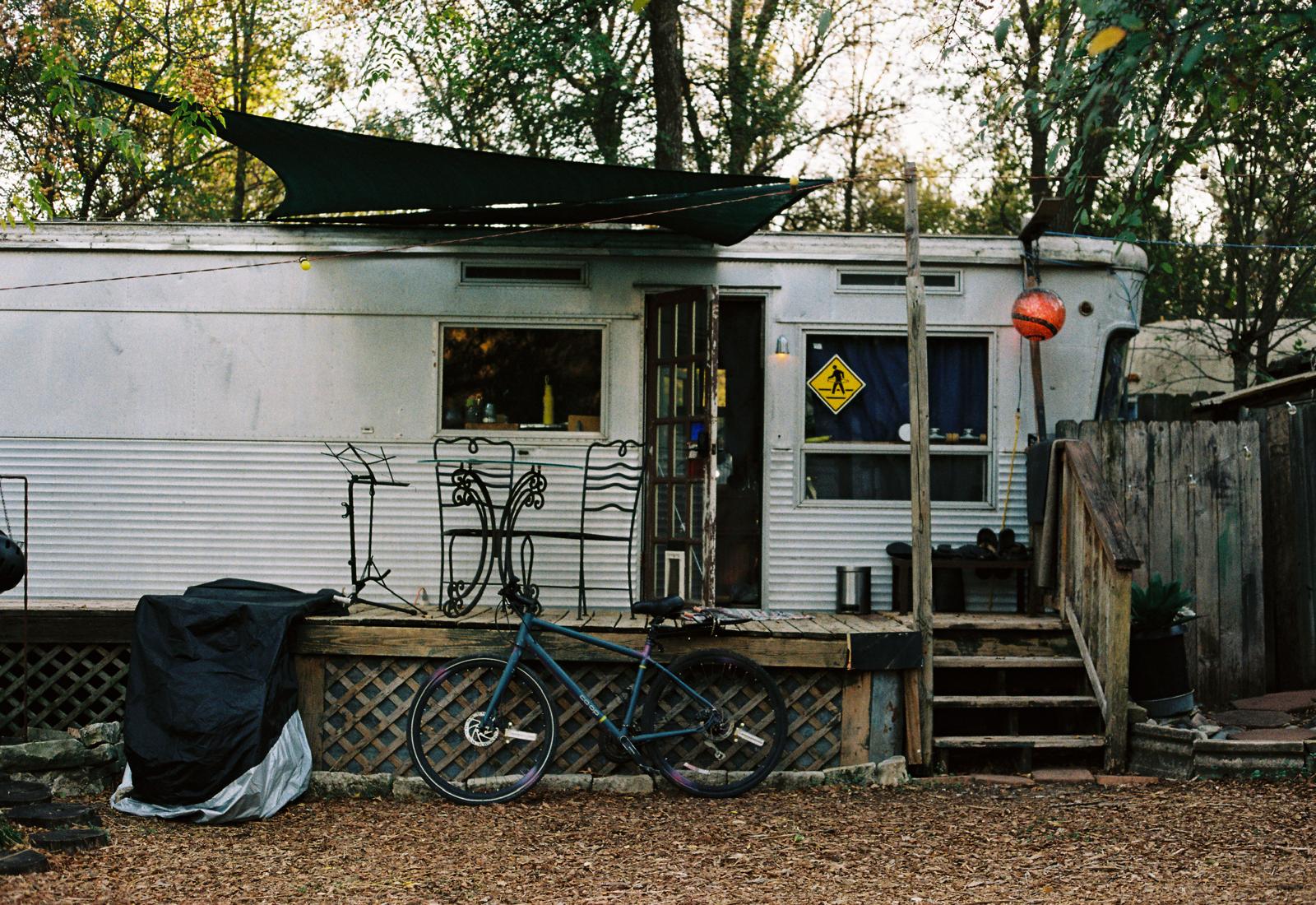
My temporary home in Austin, TX.
When finding myself at a local barn dance a few days into my stay in Austin (at the invitation of a friend I had made at a potluck a few days before), I talked to some people about my being in Austin as a Dutch person. We were standing in someone’s gorgeous and spacious backyard, a wooden stage erected in the far left corner from which country music drifted into the cool evening air. Around us, two tables were covered with home-made food, so many options that you could probably go back four times, fill up your plate to the rims, and still leave without having tried everything. I remember them looking at me in surprise, taking in our surroundings, and going “it took us sixteen years to find this place, and you stumbled upon it in a week!”. Ever since that moment, I decided to hold on to the uniqueness of what I had found, and concluded that the city of Austin seemed to carry within itself a multitude of dimensions.
Austin’s character is what makes it so unique, and many people continue to be drawn by this. For a week, I house-sat and looked after two half-feral but loving cats at an eclectic campsite in a beautiful green enclave right off the South Congress Avenue (only in Austin, I thought to myself as I cycled from my forested homebase onto the busy road every afternoon). In the morning, I would be awoken by the sound of squirrels running amok from tree to tree, dropping nuts on my trailer’s roof, and I was even lucky enough to cross eyes with multiple deer. At night, I could hear the coyotes howling into the darkness as I feared for the life of my two cat-children who still hadn’t come inside (they’re okay). This campsite was engulfed with art and individuality. Here, old bed frames were constructed into lucious garden beds, the chicken coop built on the remains of an old shed, trailers and broken down cars turned into comfortable living conditions, and the one winding path running down the campsite paved with different colored orbs of glass that would glitter in the sunlight.
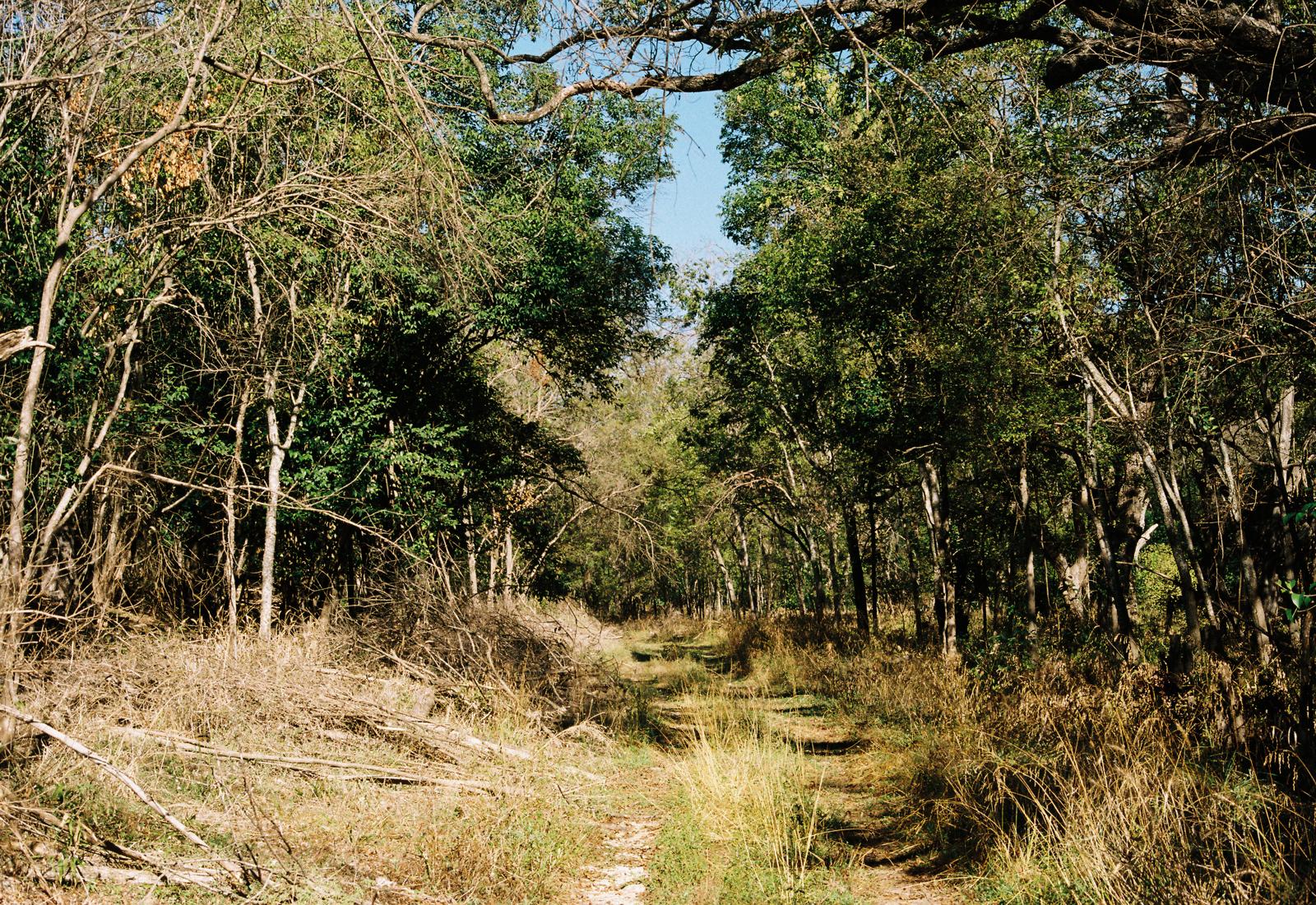
A swath of wildlife hosting deer, skunk, coyotes, butterflies, birds and more right off South Congress Avenue.
One of my neighbors was a young man, a philosophy major originally from Utah but with Greek descent, who hoped to one day permanently migrate to Austin. Every time I saw him, he wore a white cowboy hat, adjourned a pair of beautiful boots, fashioned plain jeans and a white t-shirt, and I found out that each morning he could be found balancing an old-fashioned cigar between his lips. The only thing that was still missing was a horse, but I wouldn’t be too surprised if he would one day add it to his collection. Most nights, he and other community members congregated around the campfire to play acoustic guitar and I swear I even heard someone play the fiddle. Austin weird still existed, and was alive and kicking it.
White Austin vs. Black Austin
While white Austin seems to have managed to maintain its identity fairly well, there is a part of Austin that is slowly wasting away too. Although it is one of the fastest-growing cities in the United States, predominantly because it is a relatively nice city to live in (to be fair, there aren’t that many great options…), it is also the only growing city with a declining Black population. This was fairly noticeable and even in my perfect looking enclave I couldn’t help but notice just how white everyone was. Up until that point I hadn’t been surrounded by exclusively white people since partaking in a Trump rally in Phoenix, Arizona, and in a way, this experience had begun to feel offly un-American to me.
Turns out, in 1928, the city of Austin quite literally cemented segregation into its urban planning. Within two years, 80 percent of Austin’s African Americans were moved to the East Side. This wasn’t a natural trend and instead it was stimulated (forced) by moving institutions upon which Black Austonites depended towards the east, along with closing down schools and public facilities in other parts. In 1950, the city even built the I-35, a 3,500km highway that runs from Minnesota to Texas, right through the heart of Austin – physically separating the east from the rest of the city.
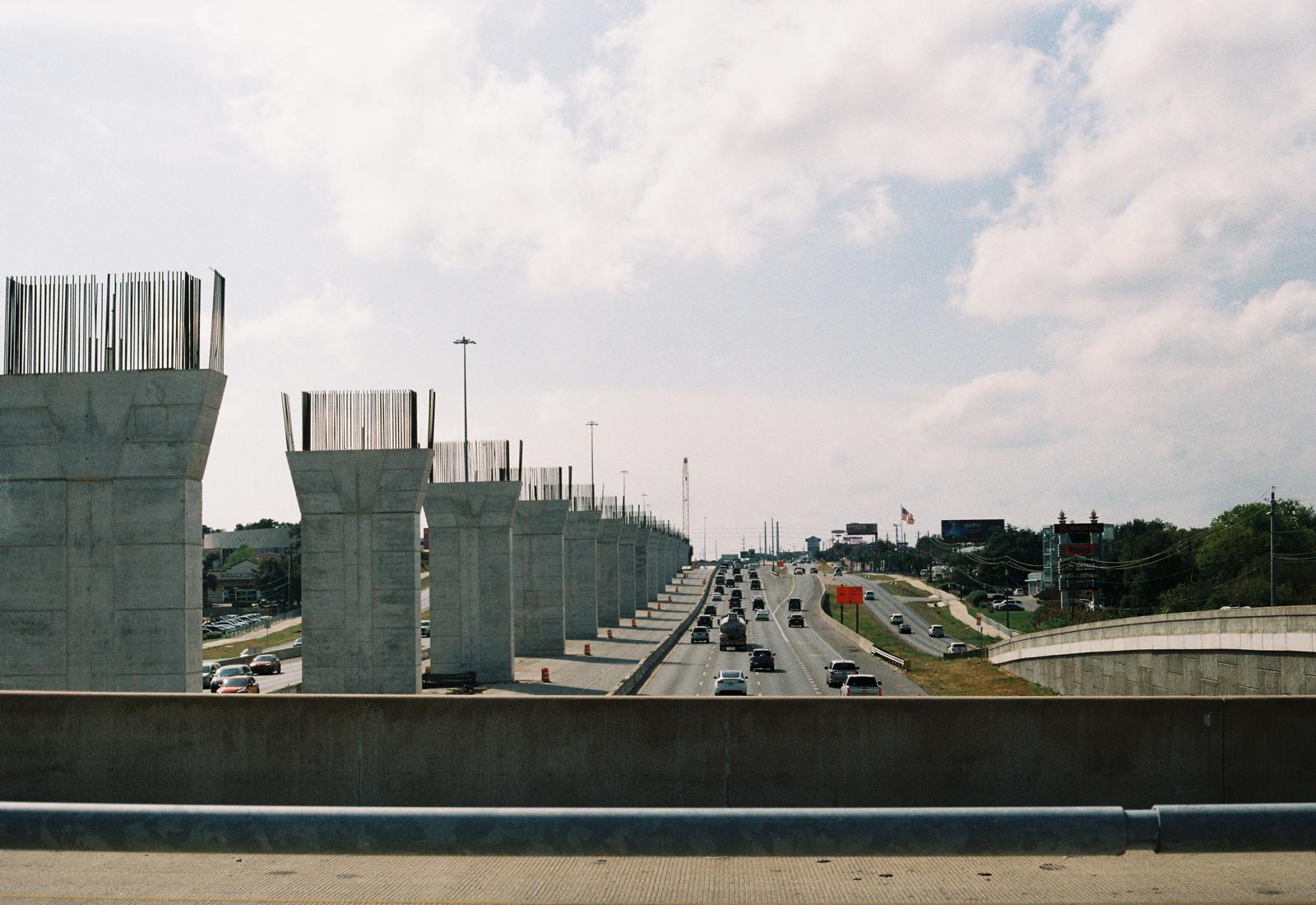
Highway 35, currently under construction to be widened.
At that same time, other parts of the city underwent transformative changes and priority was granted to preserve natural spaces in order to market the city as a beacon for green progress and growth. Meanwhile, polluting institutions like petroleum storage tanks and power plants were moved to the east side, of course. Whereas people on the western side of the highway lavishly enjoyed Austin’s unique natural water pools, people on the east developed acute and chronic health issues, cancers and diseases caused by pollution.
Visit Austin in 2024, and you’ll be told to explore the East side if you’re in search of a more alternative and off the beaten path experience. Sixth street, known for rollicking bars and trendy nightclubs hosting live music, is supposedly more eclectic, unique and authentically Austin once you cross that same, dividing highway. By now, East Austin has become one of the most gentrified neighborhoods in the city as the rising cost of living has pushed out the Black and Latino residents who have long called it home. As a result, trendy businesses and new developments have replaced long standing community establishments, ripping away at what made the east side so unique in the first place. At the same time, the west side is just a shell of once it once was, offering a commercialized bar experience worlds away from what used to make Austin’s Sixth street so special.
The Future of Austin’s Youth
Like most American cities, Austin struggles with increasing homelessness and rising levels of drug use. At the same time, big tech money is dominating the city’s changing landscape and steering much of the city’s economic growth. This trend gives shape to a certain disconnect between what the city experience can be like if you have money, and what it will realistically be like if you don’t.
Outside of a gas station on one of my last evenings in this city I met Josh, a twenty-one year old born and raised Austonite. Josh and I ended up talking for well over an hour and if I wasn’t for the fact that I had somewhere to be, we probably would have stood there well into the night. He was wearing a white shirt with more holes than I could count, a pair of black jogging shorts and some slippers. From under his right eyebrow, a deep scar ran across his face toward his ear. “Car accident”, he told me later, rubbing his finger across his eyebrow.
He struck up conversation with me as I was fumbling with my bike lock and asked whether I had ever gotten my bike stolen, a question that initially caught me off guard (and one I couldn’t quite answer on account of never having properly owned a bike in the U.S. at that point). He told me he simply asked because there are many people on the prowl for nice-looking bikes, to sell and buy drugs with. While telling me this, Josh pointed towards a pawn shop not much further from us, a decent enough looking business throughout the day that turned sketchy in the darker hours of the night. “Places like that, they’ll buy anything, even if they know it’s stolen”. We watched the flickering red pawn sign from afar and thought of all the stolen trinkets that could be on display right at this moment.
We were standing in South Austin, right off South Congress and a few minutes down from US-260, an east-west highway that runs from Houston through Austin, miles apart from the barn dance I would be attending less than an hour later and the farm that I had just left.
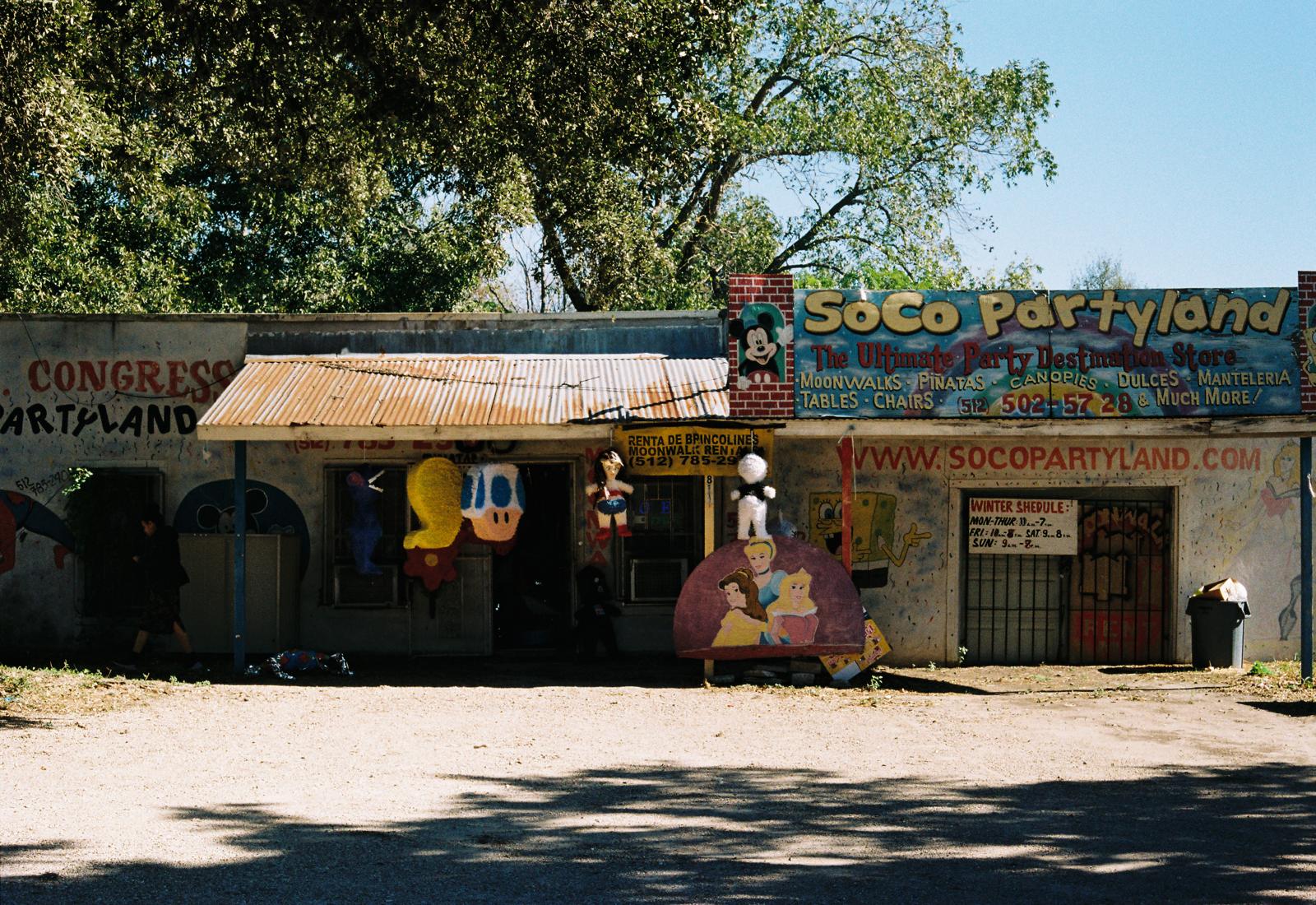
South Congress Av. hosts many random businesses, including this party goods and attire shop.
What followed was a conversation on Austin’s police presence, the cold stint in 2021 that sent Texas in a pure chaos, climate change, drug use in the U.S. (“Is fentanyl as big a deal in the Netherlands as it is here?” he asked), trash-lined highways, and the 24/7 economy that dominated much of American life. Despite being just twenty-one, he spoke with such an awareness of the world and the unfortunate reality in which he found himself that I genuinely would have sworn (or perhaps, wished) that he must have been older. I generally make this mistake more often, as youthfulness seems to be rushed in America.
He told me that he worked night shifts up at USPS (“Thankfully a labor union job”, he said, a fact he would have to hide when applying at future jobs as they are not generally keen on hiring individuals with labor standards) and slept through much of the day time. This alienated him from the Austin that existed throughout the day and the one that I had grown to know. Instead, his day to day consisted of continuously catching up on enough sleep to push himself through the night. “All that because it pays slightly more,” he confessed. And even then, he was just barely scraping by.
I would have loved to know more about his version of Austin – his go-to spots and his group of friends – but unfortunately it was time for me to move on. I did ask him if he felt like the city has changed over the years, although I realised later that he probably never even experienced the city prior to the tech-boom, the soaring housing prices, and the processes of gentrification taking over historically marginalised neighbourhoods. His answer? He simply told me that Austin would always be Austin, regardless of the changes taking place, as Austin is within the people who call it home.
I hope that he was right, and I also hope that those who have shaped and continue to shape this quirky and weird city can keep living in it, especially now that its future is becoming more uncertain due to the rising cost of living for all. And let’s not forget that with as un-Texan as this city might feel at times, it still lies within the heart of a big and dry Southern state, which also happens to be one of the U.S.’ fastest-warming states. Climate catastrophes like lasting droughts and extensive heats will affect all people evenly, regardless of your type of weird. But if there is a city best equipped with the identity markers needed to construct bridges between different types of people, it ought to be Austin. It has to be.
When someone tries to tell me that Americans have no culture, I can’t help but laugh. “What do you mean?” I ask, deeply perplexed by their statement. I have personally found that there is tons of culture here, after all. In fact, it is at all times everywhere around me, with some 283 million cultural artifacts to my left, right and ahead. I am talking, of course, about cars – a symbol so deeply central to American life that it is near difficult to imagine without it. People eat, sleep and breathe their cars and it is impossible to envision a situation where one might have to leave their metal fortress. This is the country where most fast food chain restaurants offer drive-throughs, where you can purchase liquor and groceries from the comforts of your vehicle and, as someone recently excitedly told me, buy marijana at a weedstore drive-in. Heck, in some states you can even cast your ballot from your car.
Like it or not, in a lot of ways American culture is centered around cars. Some people here love their car. Cruise through a suburban neighborhood in Austin on Sunday and you will be met with countless individuals, mainly men, passionately scrubbing their wheel spokes, tinkering with bits and bobs under the motor cap, wash their windows, change the wheels, or simply admire their cherished possession from afar, hands resting on their hips and elbows pointed outwards. Here, the idea of a car has grown synonymous with freedom, connection and masculinity (but that’s a whole different thing). You won’t have to search far to find some widespread examples of this.
Roadtripping is by far one of the most popular ways of discovering the United States and there are countless books (Travels with Charley, Blue Highways, Fear and Loathing in Las Vegas, On the Road, Deep South) and films (Into the Wild, Rain Man, Little Miss Sunshine, Thelma & Louise) recounting some of these journeys. Although the road itself is not central to most of these pieces of fiction, it is just a slat of asphalt after all, the road quite literally drives the plot forwards and it often poses challenges for people to overcome and provides crazy stories to recount to later generations.
The American road seems endlessly filled with adventures and it doesn’t take much to find real Americans who have at least in part undertaken some of these journeys. For instance, I have noticed that people will talk among each other about cross-state highways with such a familiarity that I too now know where Route 66 (Chicago to LA), Route 55 (Ocean City to Sacramento) and Interstate 35 (Laredo, Texas, to Duluth, Minnesota) take you (yes, yes, I know this is common knowledge to most – I am late to the party). I met a fellow young traveler who nearly made his way through all 48 ‘mainland’ states by car, a temporary neighbor who once drove his way from New Jersey to California, a hostel receptionist who had driven from Northern Nevada down to New Orleans, and a now friend who once drove from Texas to Arizona just to get a coffee.
In essence, a car can take you wherever you want to go, from East to West and North to South – both across the United States as well as across the city you live in. Do you just need to get some groceries? Fear not, it is just a few minutes driving. If you’re lucky, it doesn’t even really matter what direction you go into, because you will find a hub with stores wherever you head. Crave a drink? Well, you have five soda-spots to your disposal so the picking is yours! There’s mobility offered by a car, condensing the large distances present in the United States. Besides, car culture has monotonized large parts of the U.S. with similar restaurants and gas stores popping up all across the country so there is no reason for you to truly venture far.
In the U.S., cities seem to be built around highways and their unquestioned presence takes centrality in urban design. Roads are broad enough to accommodate the bustling of cars even through Downtown areas (contrary to the Netherlands where the center of a city is often car-free), parking lots could take up as much space as apartment blocks, highways are continuously extended and widened to reduce increased congestion and traffic queues… despite evidence that more lanes correlate with more cars and more traffic; a viscous and seemingly unbreakable cycle.
Although the motorized vehicle may have once been a beacon of personal freedom, it is now more comparable to a pair of shackles one has to drag around once they exit their front doors. The U.S. has built a world in which car-dependency is vital. And with it, it has constructed an economy equally as centered around cars. There are 35 gas stations per 100.000 people here (25 per 100.000 in the Netherlands – still too many if you ask me), Americans generally spend 20% of their monthly income on their car and car related services (in comparison, Dutch people spend 10% of their income on transport – which includes both cars and public transport) and in states like Texas 97% of their state transportation budget goes towards roads, not public transport.
People need their cars to drive to their jobs, with some 86 percent of Americans driving or car-pooling to work every day. Research even found that access to a vehicle improves employment chances, especially among welfare recipients. Here is the catch though: without a steady income, owning a car is near impossible in the first place, making it difficult for people to attend interviews or arrive to work in time. Meanwhile, with American cities built around this mode of transformation, people without cars increasingly struggle to get around. Public transit is made less effective, and walking and cycling are generally considered unsafe and ineffecient. You might have to walk around large parts of the highway in search for an under or overpass, for instance.
As such, I have international friends who have become reliant on other, American, friends to drive them to Costco once a month so they can stock up on the essentials. There is no way to go out there by public transport, and walking back with heavy bags would be impossible. In food deserts, rural parts of the U.S. where grocery stores are more than 10 miles away, people are quite literally forced to own or borrow a car in order to access fresh foods. No car, no food.
Dutch individuals often feel pride at the fact that there are more bikes in the Netherlands than people. The same, albeit somewhat altered, fact of the United States having nearly as many cars as inhabitants is not received with as much glee, with 92% of Americans owning one or two vehicles. Highways are continiously being widened, destroying residential and green areas in its destructive path and eating up the swaths of nature that once made the U.S. what is. And worse of all, CO2 output continues to increase alongside it – at a time when we should combine forces to reduce them at all costs.
Meanwhile, the car has created a culture of isolation and alienation, with people spending more time on their own than being surrounded by members of their community in public transport options. Driving is a lonely thing, after all. In the 21st century, the route from point A to B no longer evokes the same sense of freedom as what it once did, with roadsides being littered with plastic cups thrown out of speeding vehicles, and traffic jams eating up much of your time and patience. There is very little still enjoyable about feeling the wind in your hair when you don’t hear anything but gas engines and smell anything but hot asphalt and CO2 pollution.
The United States has more culture than just cars, of course. There are countless of cuisines to explore, different natural landscape to embark into, various local dialects that ring in your ears like sweet honey, and instead of having just one combining culture, the U.S.’ strength is in its multitude. This country has proved to be a beautiful place to discover by foot. You end up connecting with individuals in front of stores or on curbsides. You can stop in your tracks to appreciate a beautiful sycamore tree whose roots push up a paved road or regard the Chihuahuan Ravens as they flutter around at dusk. You can help people you come across, people you would have sped by otherwise. Isn’t that what a real American journey should be all about, anyway?
Once I decided to return to the United States (a questionable decision on its own, I am aware), I knew exactly what I wanted to do: take only Greyhound buses from West to East. I figured that this way I would be able to see more of the country, experience first hand its infamous ‘open roads’ (even without having a driver license) and come into contact with different types of people, all the while selfishly relieving myself from having to feel so bad about the size of my ecological footprint while traveling (very, very big). Besides, I had found my previous experiences with longhaul buses to be quite enjoyable and the eight plus hour treks quickly proved to be an opportunity for me to put up my feet, relax, and rewind. Two out of those three things, at least; with the limited leg space they provide in Greyhound buses, there is actually no way for you to physically stretch out beyond the 30 centimeters in front of you. But being short comes in handy sometimes – and so does the fact that you’ll oftentimes have a near empty row to yourself.
Now, over time my initial plan has slightly changed. For instance, I have had to opt for Flixbuses every now and then as this multi-billion company has bought out the 110 year old Greyhound. Additionally, the bus-bound part of my journey has been far from central to my entire trip. This past month, I have only taken four buses and I have generally spent more time in cities than I have on the road. However, there is still a lot I have learned and seen on the never ending web of American highways – besides just a million gas stations. I have found that small acts of kindness go a long way when there’s nothing ahead of you but asphalt roads and empty landscapes and in the U.S., you can make easy friends with your fellow passengers.
It’s not that bad, right?
Despite the fact that my personal experiences have been positive so far, there is a lot to remark about the Greyhound transportation system in general. For starters, it is not always the safest option. When I first outwardly expressed that I was considering taking buses across America, someone immediately told me about a beheading that had happened on one of these long-haul contraptions. Although it initially shocked me (and fair enough because the story is insane), I ultimately decided not to let it get to me too much. My previous experiences on the East and West coast had both turned out well and the craziest things that had happened were: a woman essentially taking most of my snacks (she kept asking for more until I ultimately gave her the entire bag) and the bus once nearly driving away without everyone on board (four people ran after us while holding bags filled with fast-food, one just trailed behind them calmly – they ultimately made it back on but not everyone is that lucky). Besides, if the worst crime to have happened on a Greyhound took place more than 16 years ago and in Canada, then surely things must have changed… right?
Well… yes, but for the worse. The bus system is in such a state that unlike myself, most other 60 million users do not take it for fun. I must admit, I never before felt as though I had seen the true face of despair until I set foot into the bus station on Buckeye Road in Phoenix. A cloud of heavy cigarette smoke lingered in the air right in front of the entrance – almost indistinguishable from the car fumes exalted by the busy road just feets away. A woman, half naked under her thin blanket, was attempting to catch some of the escaping heat that would exit the building with each opening door. I wondered if she was from here or had simply ended up here over time, as seems to be the case for many unhoused people in the U.S. – their movement continious and never-ending. I didn’t ask, her face turned away from me towards the dark crevice of the corner.
Inside, it didn’t look much better. People were bundled up in duvets trying to get comfortable on rusty metallic benches or even on the floor. Overall, there wasn’t enough seating for everyone, there was very little oversight and information provided, trash riddled the floor leaving sticky marks, and I was hard pressed to find any nutritious food around, apart from the limited options offered in stocked vending machines. I must add, though, that I never felt unsafe around the people I shared this space with. I’ve struck up pleasant conversations with people, shared cigarettes, lighters and phone chargers, watched someone’s bags as they went to the bathroom and smiled at my neighbors and received smiles back. There is a warmth in the people, even in inhospitable places such as underfunded and down-ridden Greyhound stations.
Greyhound, what once was will never be
Over the past couple of years, Greyhound has lost most of its national vehemence. The bus that once sputtered its way across the country, proudly sporting its racing greyhound glistering in the sun, is no more. Whereas they would in the past erect stunning buildings in “art deco” or a “streamline moderne” architecture style to accommodate their weary travelers, they have now opted to close, demolish or sell said-stations instead. In the cities where they have decided to keep their stations, they have been moved to cheaper, less accessible, neighborhoods or to curb-side pick-up and drop-off spots (in Philadelphia for instance, their assigned location is right under a highway). There almost seems to be a persevering notion that those taking the Greyhound bus aren’t worthy of better treatment. After all, they might think, it is predominantly low-income groups, immigrants, or travelers with mobility impairments who depend on it. They pay little (in comparison to more luxurious modes of travel like planes – Greyhounds are still far from cheap!), and so they get even less in return. And worst of all, companies like these continue to get away with it.
For your standard Greyhound commuter, having to rely on this deeply underfunded public (yet privatized) transportation system is a necessity, not a choice. They might not own a car, be short on money, or have no other way of traveling under the radar otherwise. It is not unlikely that you will be traveling alongside men who have just gotten out of jail and own nothing but the clothes on their back, young adults carrying all their belongings in a single backpack as they upend their lives and move across states, or mothers dragging sleepy and impatient toddlers from bus to bus. The Greyhound is far from luxurious, but not to their fault.
In fact, I first heard about taking the bus from one side of the U.S. to another from an immigrant who had made the trek himself to find better (and warmer) opportunities on the West Coast. He told me he had done it in one go and that it had taken him around three days and 200 dollars. On his way, his phone had gotten stolen in Texas and he had had to continue his journey with no access to his friends and family, nor to a translation app on which he depended. A few seconds after he told me this, we had to rush back to his motorbike as he had left his new phone in his phone holder, which thankfully was still there. “I should know better, being from Colombia” he jokingly told me, “but thank God for San Francisco”. I think of him often when I take the bus and someone asks me a question, written out and translated on the phone held between us. I think of him when the kind bus driver translates the important bits of information to Spanish, to ensure everyone understands. To be frank, I cannot even begin to imagine how difficult it must be to navigate a system that does so little to accomodate you.
My acquintance sparked within me the idea to follow a similar journey myself, the only difference being that I was not necessarily as dependent on it as others might be. Although I have mostly attempted to take public transport to the Greyhound stations and rely on these structures as much as my fellow travelers, I do technically have access to alternatives like Uber and if push comes to shove even airplanes. I can afford to stock up on filling food beforehand, could purchase goods at our many stops on the way, have a powerbank at my disposal to keep my phone charged (and have a phone in the first place), and my being there is never questioned. Unlike a lot of Americans or immigrants in the U.S., I personally don’t face any structural racism or discrimination when traveling from place to place and I am generally in a privileged position, even on a Greyhound.
Under the radar, in the bus
I quickly found that my friend was far from the only one taking on a journey like this and I would often be surrounded by individuals speaking little to no English and bearing no official papers. In San Antonio, Texas, there was even an Interfaith Welcome Committee roaming around the Greyhound bus station to accommodate such people and provide refugees with tools needed to further their journey. They gave out food, diapers, comfort, information and, in their specific case, prayer.
Pressured by ACLU and immigrants rights activists in 2020, Greyhound has denied Immigration and Customs Enforcement (ICE) officers access to their buses and transfer stations to question individuals for their immigration status. As a result, it has generally become safer for people to take these buses, providing them with more cross-country mobility. I discussed this with someone on the final leg of my 20 plus hour journey across Texas. He told me he had been asked by an ‘illegal alien’ (the words stung me as he uttered them) whether it was safe to be there without papers – which had prompted him to ask the limited staff available, being in a more comfortable position himself. ‘For now’, they told him, ‘he would be fine’. We wondered whether president-elect (these words sting equally as much) Trump would in time pressure companies like Greyhound and Flixbus to regrant ICE with access on these buses, especially in light of his commitment to crack down on immigrants. As of this moment, though, there thankfully still seemed to be a collective commitment to ensure that we could all safely go from point A to B, regardless of who you were or where you’re from.
Small acts of kindness travel far
After my short interaction with a man from Mexico answering his question on how much longer it would take us to reach San Antonio, Texas, (una hora y trentes minutos – my Spanish was bound to be more atrocious than his English), I got back on the bus to devour my undercooked roadside potato wedges. My fingers were getting oily as I dipped them in the watery ketchup and ‘taco sauce’ and brought them to my mouth. A few moments later, my Mexican bus neighbor, separated by just the alleyway between us, impromptuly came over to offer me a handful of napkins he had picked up – enough for himself, and enough for me. We never spoke much after that, but we sternly nodded each other a goodbye as we reached the transfer station and each embarked in different directions.
This is just a very small example of the general kindness I have faced taking buses, and I have many more stories including a random book exchange an hour before my bus in Albuquerque, countless well-wishes on further travels, an hour long conversation about hopes and dreams for the future, and my journeys to the Greyhound stations themselves which upon sight of my heavy bags has resulted in people offering me free food or even suggesting housing to bridge the night. I have found that whatever kindness you put out, will ultimately find its way back to you – if not by the tenfold.
To many Americans, the Greyhound is no longer an ounce of the institution it once was: a respectable way to travel between metropolitan areas in the U.S. This, however, has more to do with the company slowly chipping away at itself in search of growing profit margins than it does with the people actually taking the buses. Even when beaten down on their luck, most people have been respectable, kind, honest, giving, patient and understanding. Their tales shape much of the actual realities of American life and in a lot of ways, it is the one I am fortunate to be taking part of. I am often faced with how the United States could be, if only we learned to trust our fellow traveler a little bit more. We’re all in this together, after all.
The one thing that will keep pulling me back to the United States time and time again is definitely not its politics. Nor is it its cities, whose tall buildings reach up against our limitless sky into worlds that aren’t quite ours to own. Instead, it is my love and admiration for its diverse landscapes; from its barren plains to its fruitful mountains. There is still a certain harshness here, a wilderness of a world left untamed. But if you look just long enough there is a softness to it too. A softness that we have long lost in the world we have constructed for ourselves.
When I went to Arizona for the first time back in July, I turned 25 years old amidst the flat scapes that rise into the gentle yet unforgiving hills surrounding Phoenix. It was then that I felt myself fall in love with the desert. I grew in awe with the cacti reaching up to the sky as if in search of eternal salvation, while their trunks remained proudly rooted in the earth. I felt at ease hearing the friendly chirping of desert birds that have made these dry lands their home, most of which I had never before seen in my life. This was a world unlike any other I had ever experienced; a place where tree bark had turned green to foster photosynthesis even when trees have to drop their leaves in lasting droughts, where birds burrowed inside the prickly skin of a saguaros to nest, and where scouring coyotes still reign. There are sandstones formed into softened shapes, so otherwordly they cannot exist anywhere but in Arizona.
Up North, beyond Oregon, there had always seemed to be a natural balance, a seasonal shift that kept everything in control from fall to spring and back. It had come easily to me to appreciate the sight of the Mount Hood in the Pacific Northwest, its white-tipped peak so far out of reach yet so close one might boldly state they could walk up to it. I was familiar enough with the tall pines dancing in the winds and creaking softly, that I would rub their bark out of appreciation and thankfulness. I knew the deer, the (countless) squirrels, the American robins and the bald eagles so well, that I would greet them like old friends. I marveled at the shades of green and felt comforted at the sight of them. I appreciated the waters and the creeks that would continue to run even at the height of summer.
I had always felt like I belonged in the forests that stretch across the Northern Hemisphere – and a very large part of me continues to crave their everlasting presence – but when leaving Arizona for the second time this November, I left behind a part of me that belonged amidst the dry earth too. I learned to see its arrid landscapes not as inherently imbalanced and defined around the lack of water, but instead as perfectly balanced despite the limited presence of it. As a state, Arizona is perhaps one of the most diverse places I have had the pleasure to explore – and I haven’t even seen all of it yet. A Phoenix native proudly told me that only here “you can climb snowfilled mountains in Flagstaff and wander amidst the sweltering desert heat around Phoenix, both in one day”.
Towards the Northwest, Arizona is blessed with one of the world’s biggest wonders both in terms of spiritual significance to Indigenous populations, as well as its uniqueness and scope: the Grand Canyon. What was once a shallow sea, is now a canyon of bare rock with only the Colorado River spidering its way through towering walls. Despite the overall lack of water, you cannot help to be reminded of an ocean, the sandstone so beautifully curved and colored, like waves stuck in time. More to the East, and you will find Navajoland which harbors sights like the Antelope Canyon, a maze of sandstone shaped by innumerable years of water erosion and the Oljato-Monument Valley, which is a landscape as flat as the eye can behold on the exception of towering rocks jutting out from the earth below.
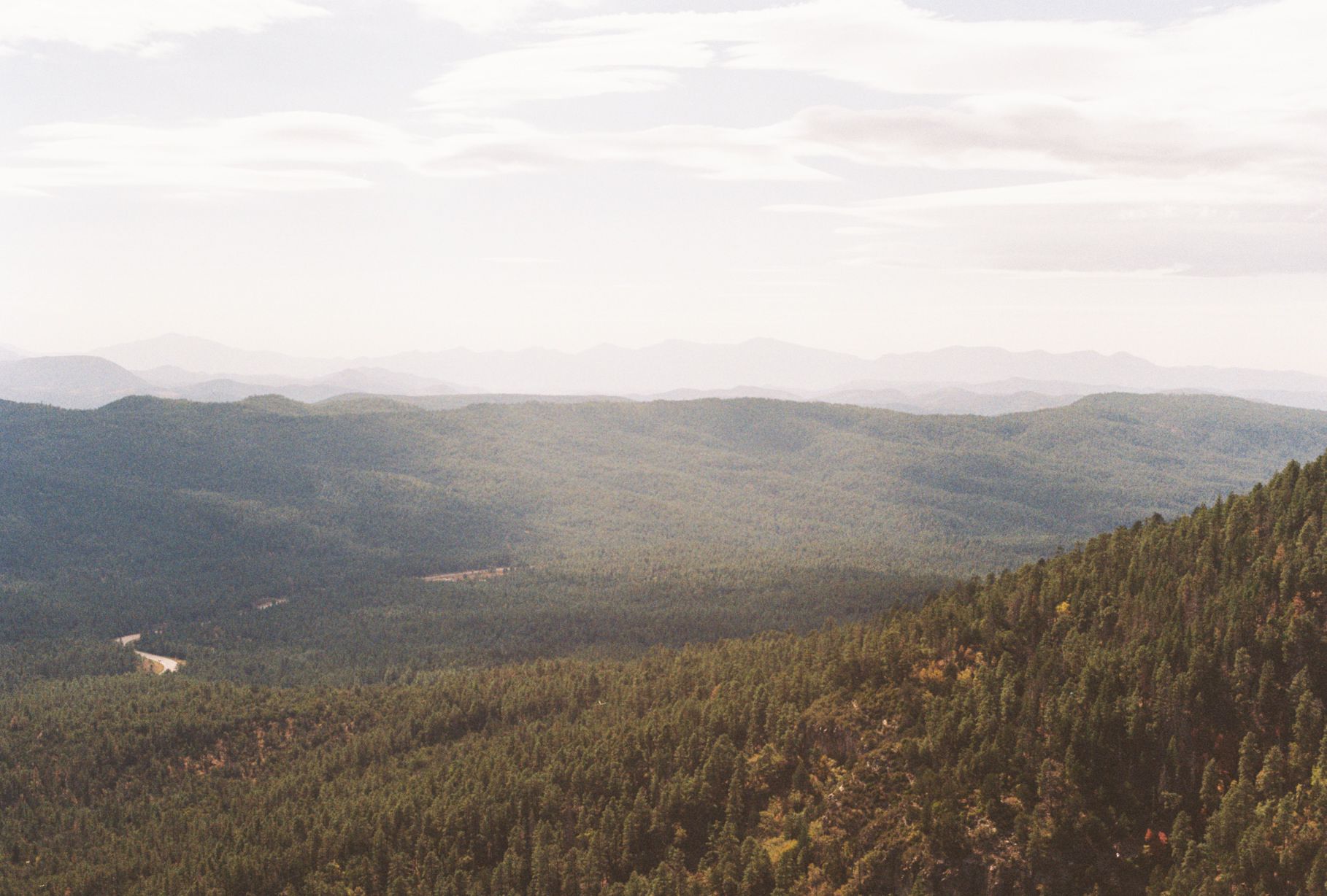
Travel slightly South to greet Sedona, a place where green-tipped and red-rocked formations stand proudly in contrast to the blue hues of the sky above. Go even further and you are met with coniferous forests as far as the eye can see. Here, you may find yourself lost amidsts the presence of a thousand trees, each unique from one to the next. You can hear the violent rustling of the pines in the autumn winds, the single screech of a bird in flight, the burrowing of mice into the safety of the bushes, and beyond that – nothing but silence once night falls. Despite being so close to the, seemingly, seasonless desert, you are now fully engrossed in its presence as the leaves turn from green to yellow.
Standing there, atop a world that spins below me, I fell in love with Arizona. I will try my best not to ponder too much on the loss of all of this. I won’t, in detail, describe the pain I felt staring across fire-ravaged grasslands and blackened cacti. I will try not to linger on the animals, dead, thrown to the side of the highway by the metal and uncaring nose of a car. I try not to focus too much on the silence, caused predominantly by our weakened ecosystem and declining biodiversity. I attempt to harbor, instead, respect for the balance of the world – a sensitive scale that we continue to tip sideways. If only we could learn to love it a little bit more and see the world for what it is, regardless of our presence in it. This is a love letter to Arizona, from tree to cactus and from forest to desert, but it is also a love letter to the force of nature, one that will reckon with and overcome whatever we will throw in her way – as she always has, and as she always will.
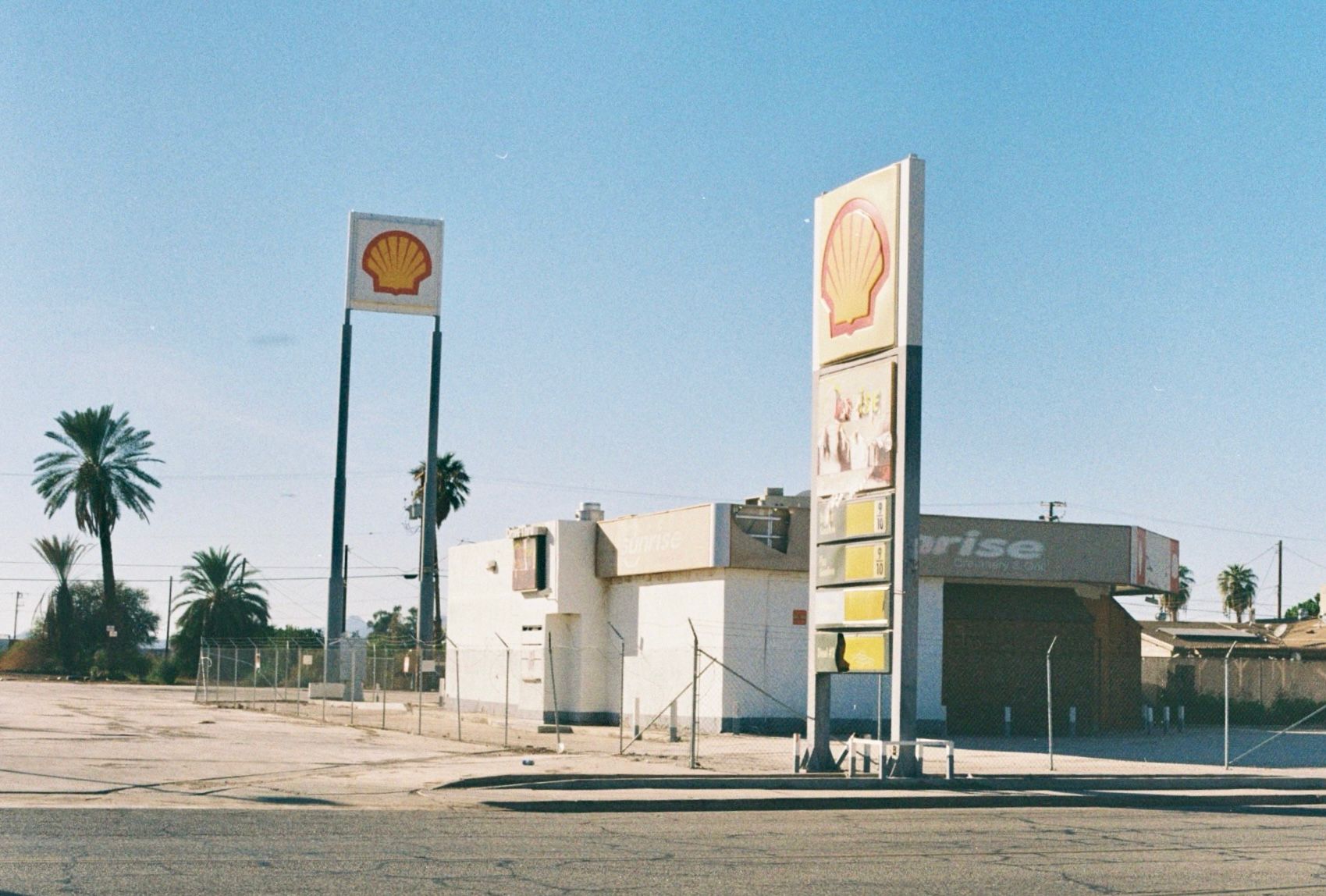
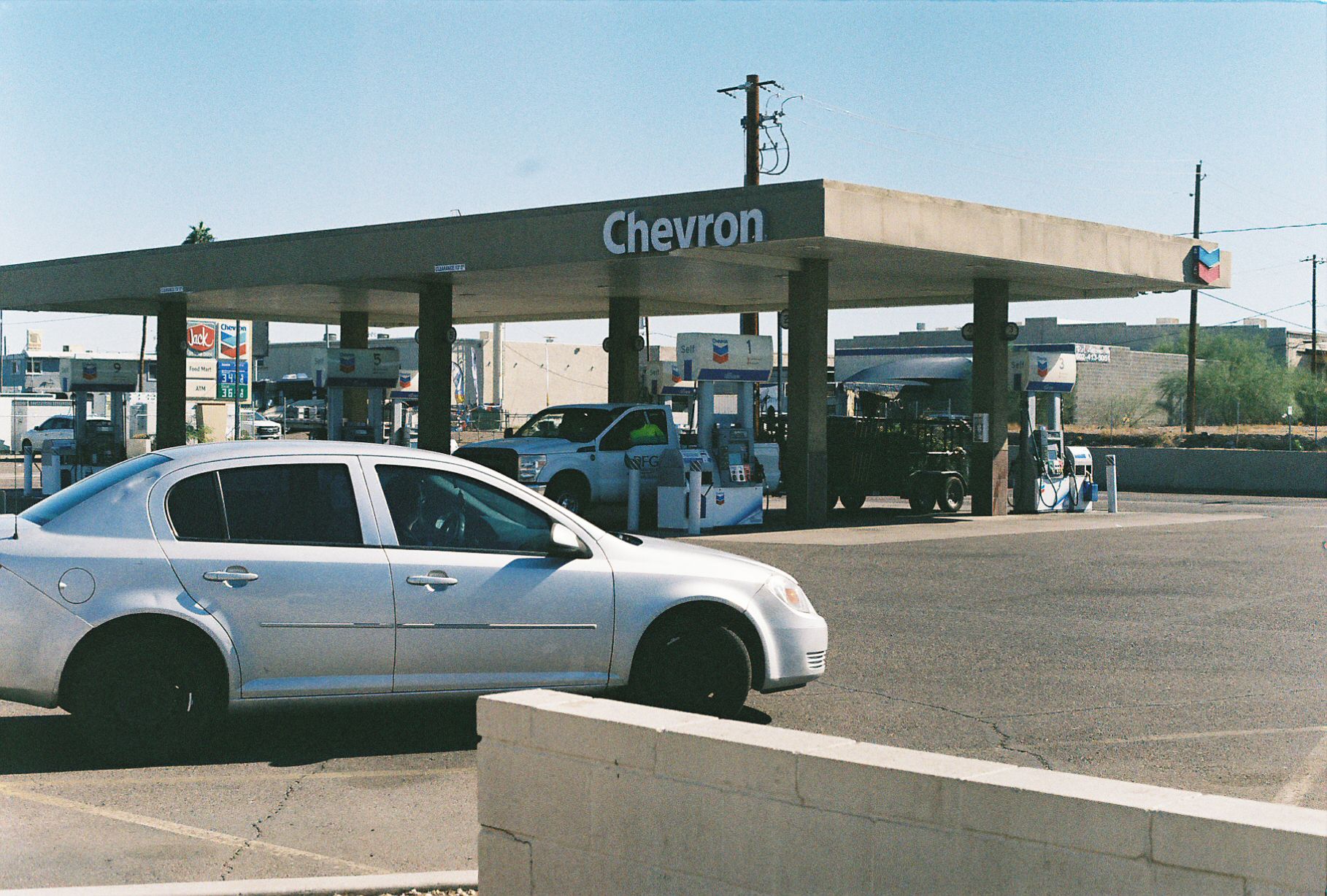
Today, I’m attempting to dive into the world of gas stations. By foot, of course. At the first one, right around the corner from where I’m staying, I buy a donut, extra large and glazed. The most American of all breakfasts. Just cheap enough to justify buying it, but not cheap enough to overindulge (for now…). The guy behind the cashier has long brown locks comfortably resting on his shoulders, his movements somewhat slowed down by the weed set in his eyes. The few times I’ve been here, I have always run into a different cashier, each a unique character in their own way.
Refueled, I walk around aimlessly. I was supposed to be making my way from the edge of Tempe into the heart of Phoenix, but I know I am not going to be able to make it in the few hours I have available. Instead, I decide, I will just go to the outskirts of Phoenix, where multiple different highways both join and split up, one making their way straight across the city in the North, and one circling around towards the west. I had been at one of these highway intersections before, at a point where two gas stations sat opposite of each other, so close in reach you could not help but wonder why one would need two at a place like this. When we got there, we had just driven an hour back from up in the mountains in Payson, Arizona back into the capital – and it was now going to take us up to two hours to simply cross the city. We were tired, smelled of campfire and dirt, and were in search of a bathroom. Neither gas station had one available, and even if they did, we were sure they would have just been made unavailable to the people anyway.
As horrible and dystopian as that place had felt (I have a lot to say about cars in America), there was something to it too. This is where many Americans spend a lot of their time, after all. Filling up their gustling car tanks to continue their trek from point A to point B. Buying drinks like Mountain Dew or Diet Coke, preferably iced, in large styrofoam cups the size of my head. There are gas station interactions, some good and some bad. People getting pissed about the high cost of two Dorito bags of chips, pissed about the lack of bathroom, pissed about the traffic, pissed about life in general. But there are nice people and nice moments too, even on the side of a busy road with cars chasing past you and piles of unhealthy and overpriced sugary foods towering over you. I was especially about to find out more about the kindness of roadside gas stations and fast-food restaurants today.
Even when I have the intent to hike somewhere in specific, I will usually end up at different places on the way. This time, I was driven by a ferocious need to escape the busy hustling and bustling of a life defined by movements in metal contraptions and set out to find some sort of nature recluse – just to unwind. I have been tired and worried about the world lately, and there is not enough for me to do right now to justify sitting in those feelings. Nature grounds me; it pulls me back onto the earth in a sense of belonging. Even in the U.S. I feel like I belong, because it is the same world keeping me alive and the same one that I cherish and appreciate so much. After a few minutes of walking (the desert heats up quickly and it is now hotter than I thought it would be), I come across a very large patch of broken but unused ground. It is littered, like most places, and there seems to be nothing of beauty growing among the disturbed rocks and unsettled dirt.
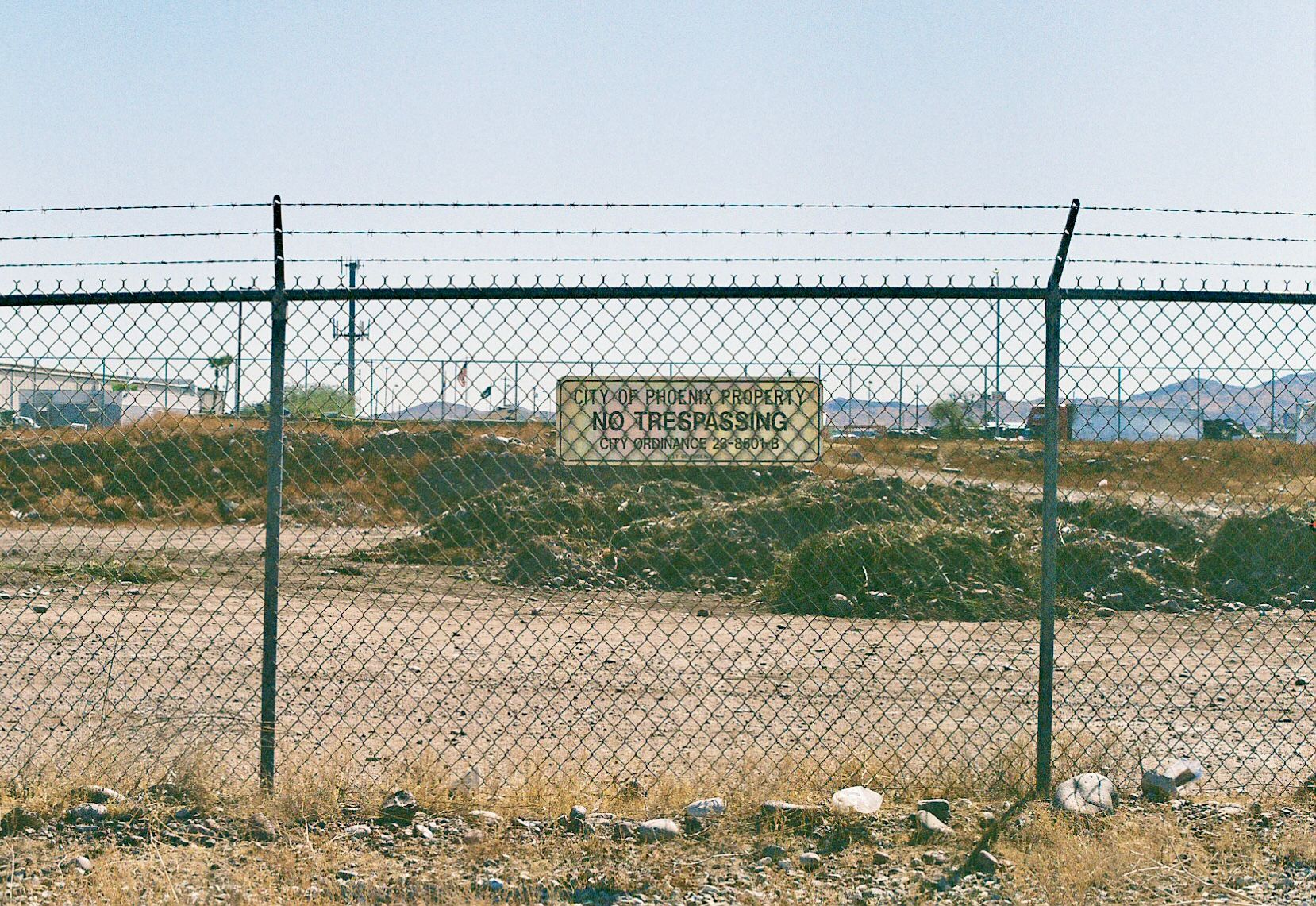
In search of something, I come across a paved and newly constructed path that circles its way through the park right toward the edge of the dried up Salt River. Under the bridge crossing the sometimes-existing waterway, there is a plethora of beautiful yellow-green bushes and plants, kept alive by the shade providing them, but still struggling to survive the dry heat. They rustle softly in the wind and I wish I could walk among them, hear around me the chirping of desert birds, and perhaps even the sound of croaking insects. But alas, there is a gate restricting my movement and a “no trespassing” sign warning me of further alterations.
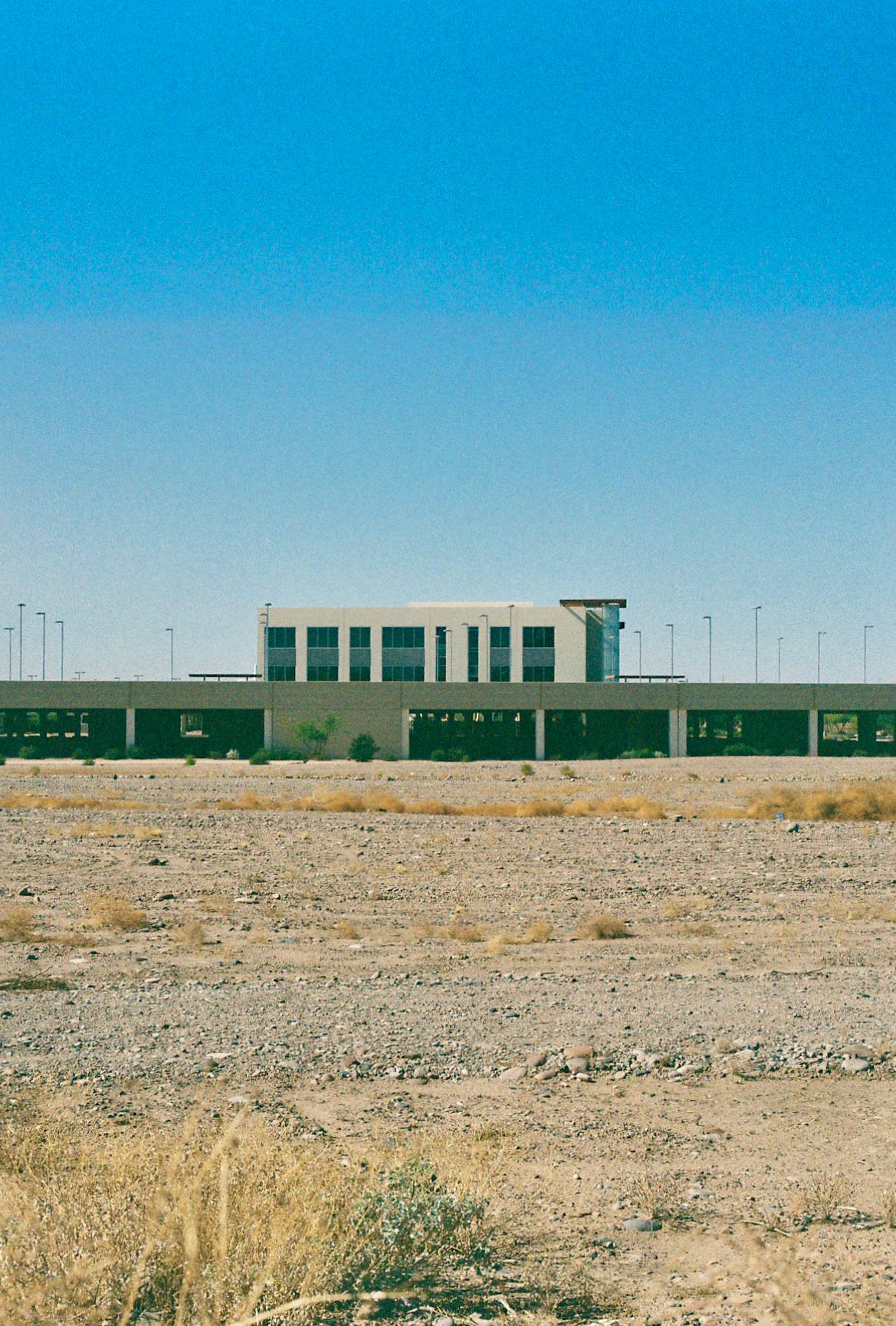
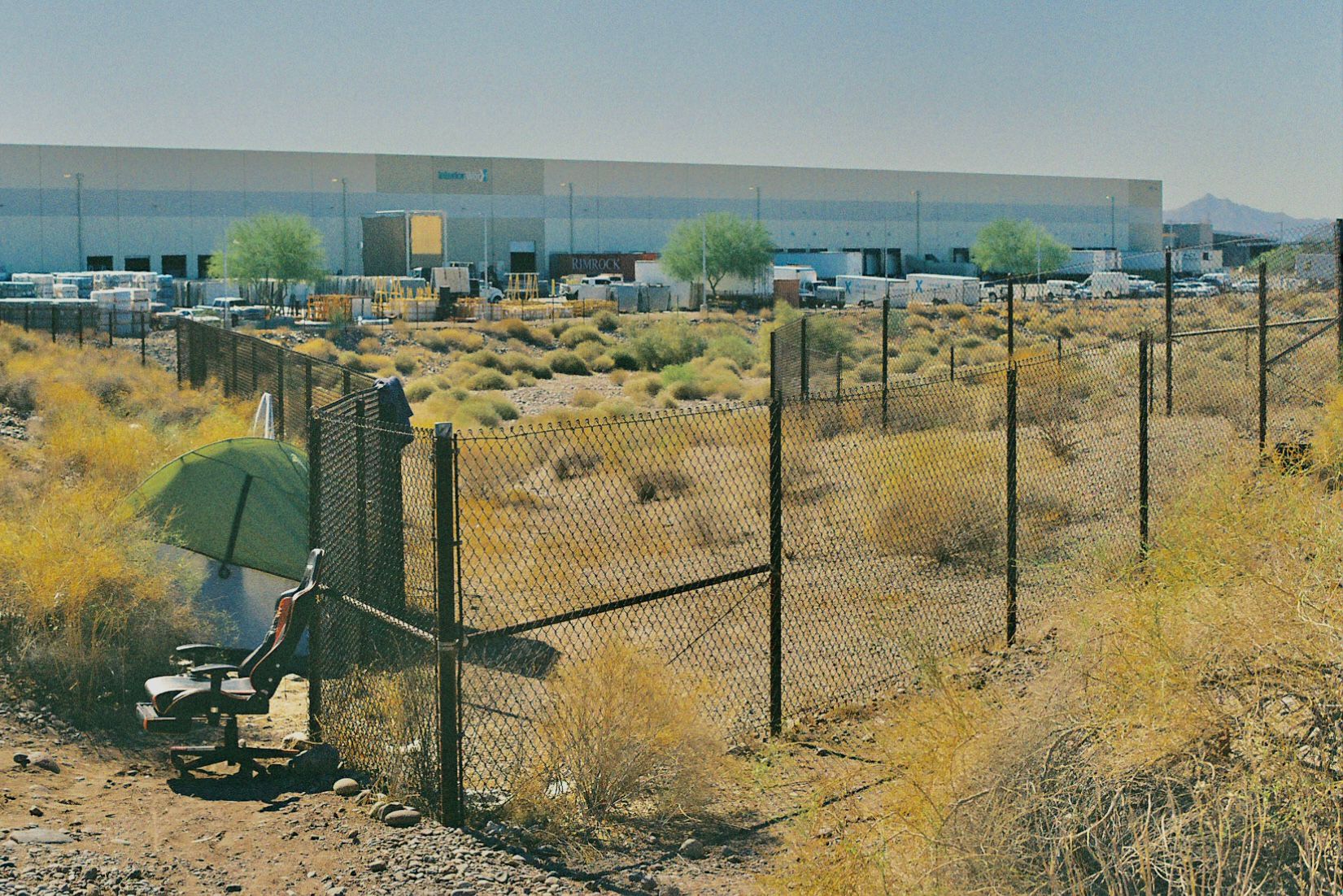
I keep walking on the path, my new partner. I come across cyclists, most lost in their own world with a set of headphones tightly covering their ears. I wish I could convince them to listen to the sound of bird chatter instead – but I agree that the endless thumping of car vehicles is a sound worth cutting out. On my left, there is a large construction project on the way, and someone’s tented house set up at the edge of the large gate surrounding the, now, private property, just out of the blistering sun. To my right, there is nothing but the towering Phoenix center climbing up toward the desert sky, and the dry Salt River that seems to harbor no life. I keep going. Out of stubbornness, perhaps. There has to be more. Something better. On my left now is one of Phoenix’ waste transfer management stations, otherwise known as a dump, and on my right still the empty river with an airport just on the other side. I feel the fumes set in my lungs.
Food Mart, Monte Vista Acre
Ultimately, I decide it is time for me to head back to the real world and continue my search for gas stations. I pick up some trash during my last minutes on the path, a senseless and endless task that does not leave me satisfied but does remind me of the small actions we could all collectively take together. I think about trash, the becoming of trash once it stops serving a purpose to us as people. My hands are covered in sand and dirt, and the smell of rotting trash set in the air is slowly sticking onto my clothes. The path I am on will just lead to more nothingness and I am in need of something new. Besides, I am getting thirsty and what better place to stock up than a gas station?
It’s cool inside. The air is dry and smelless. I’m getting hungry, too, but the packaged goods don’t scream healthy and the donut is still sitting like a pit in my stomach. I need vitamins. I chug my water bottle, preparing it to be refilled by one of the million sodas available. Before doing so, I approach the one employee on shift and ask if I can just refill my bottle instead of taking a plastic cup, but pay for the charge of a cup. Before now, I too have been opting for plastic cups – but the guilt tends to linger beyond me emptying it and it is no longer a problem I want to contribute to. The woman says, Sure, honey, and I return back to the plethora of drink options now at the reach of my fingertips. I choose (and choose wrong) a sugary Lemonaid that will end up chugging along in my backpack for the rest of the day, by account of it being too sweet and my teeth screaming at me in protest with every sip. When getting ready to pay, the brunette woman, maybe just a few years older than me, simply charges me 30 cents. It’s a small bottle, after all, she smiles. I thank her kindly, saying I appreciate it and wishing her a nice day. You too, hon, she responds as I make my way back outside. There is very little sweeter than the twain of an all-American dialect.
For the next ten minutes, I wait at the bus stop – observing the gas station and food market from afar. It would take hours to walk anywhere near Phoenix, and I am slowly running out of time on account of the plans I made later in the evening. Behind me, someone is checking their car, running the motor and hitting the gas in frequent intervals. The whole neighborhood around me seems to be focused on the car-industry, with access to tires, new cars, used cars, vintage cars, trucks, so many trucks, so within reach that one could simply get up from the metal seat at the bus stop and acquire a new car before the next bus finally arrives. I don’t have that option, so wait patiently. My black jeans soak up the sun and I revel in the warmth of it. There is joy in being outside, even with the car fumes slowly working away at my lungs.
7/11, Le Natures
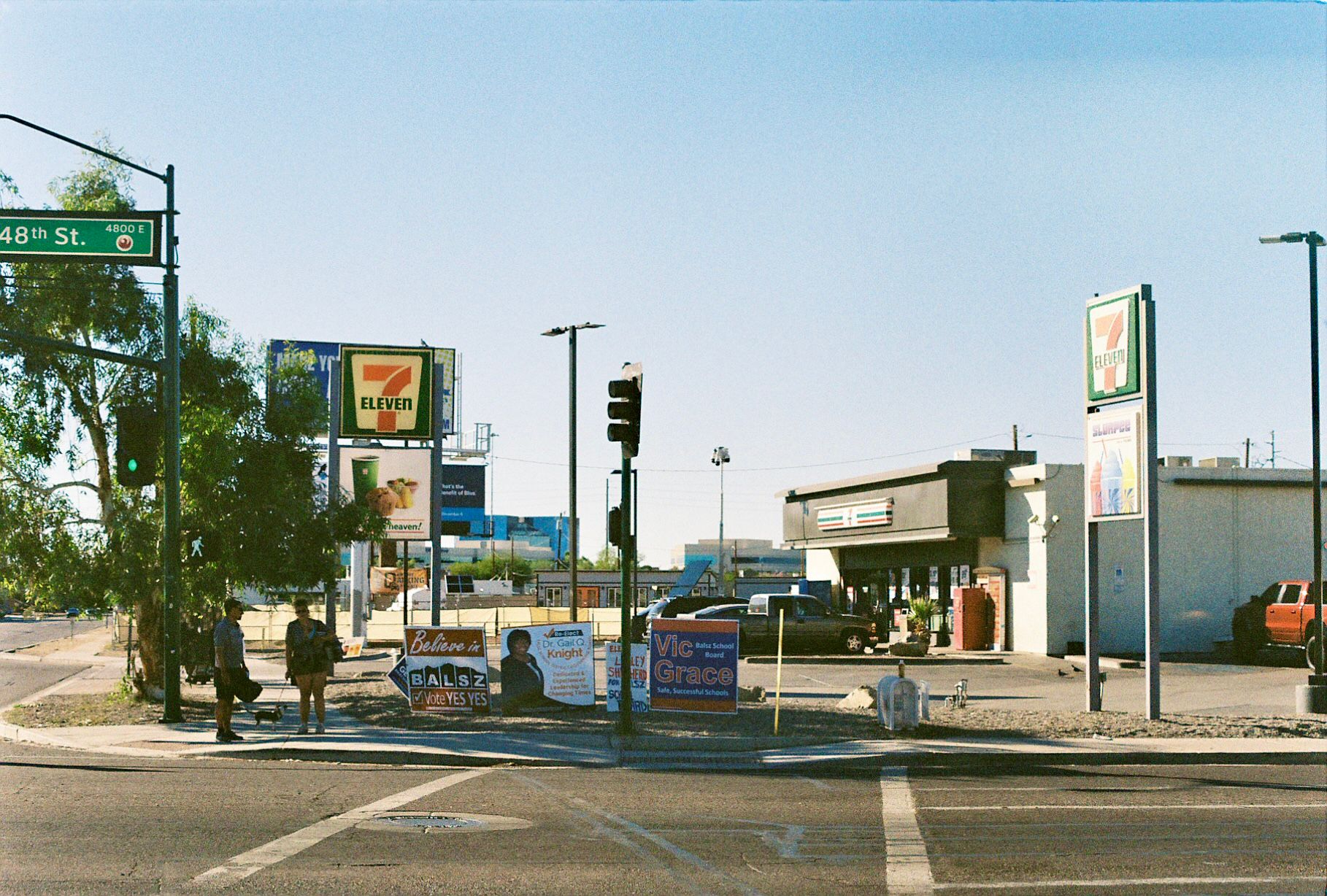
I get on the wrong bus, and only realize once I get back at my exact starting point of the day – right by the gas station where I acquired my breakfast donut. I get out as soon as I can, and start browsing for other public transport options toward my destination of the day. Every time I walk toward where I think I have to go and click renew on Google Maps, my phone struggles in the heat and my options disappear into thin air. Every time, an alternative will pop up, just a little further North every time. Ultimately I find my way, from bus to RAIL (Phoenix’ tram system), in close proximity enough to the Tovrea Castle I was hoping to observe from closeby. In order to reach the entrance, I have to make my way around USPS’ vehicle maintenance facility and postal office first. At another gas station, this one accompanied by a 7/11, I decide to stock up on vitamins. I scour the shop for any semblance of fruit and ultimately stumble on the small apples for sale, in the most down right corner of the meat and sugar filled fridge. I take two and make my way toward the cashier.
Just these, I tell him, holding up the apples. Ah, the healthy options, he smiles. He’s a tall Indian man in his 50’s, his eyes twinkling even in the shade inside. He must have seen me scouring the shop in search of something unprocessed. I try to eat one piece of fruit a day, it truly helps. They are hard to find here – in the U.S., I mean, not just your shop specifically! I laugh back. He wholeheartedly agrees and raises his hands to point out the unhealthy foods surrounding us. Before I can make any further comment, I finally see the bananas he has proudly put on display to the left of him. I can already feel the taste in my mouth, and reach out to take one. I’ll take one of these too, I quip. You should get two! It feels like he is giving me advice, making sure I stay healthy like him. Why? I ask him. Because you’ll get a discount. I laugh. Not just because I am currently being upsold (and I am falling for it), but also because the discount makes the bananas so ridiculously affordable, especially in comparison to the other food options available, that it is hard to imagine why most of them remain unsold. There is even a discount on fruit! I think out loud.
I pay for my fruit, but continue to linger at the desk. We are both in a chatty mood and I can tell we have more to say to each other before continuing with our days. There are many nice spots to take photos in Phoenix, he points to the camera flung across my chest. I can’t help but agree. Even with all the cars, there is a raw beauty to this place. There is an undeniable power in the desert. It sure can be beautiful. Phoenix is beautiful, he says as if hearing my thoughts. Do you have any recommendations? I ask him. The sunset and the sunrises. They make everything glow. I ask him if he takes photos too and he says he does, always taking photos, he mutters more to himself than to me. He wishes me the best of luck, taking photos and staying healthy in the U.S. I thank him for everything and we wish each other a great day, a sense of shared kindness, goodwilling and humanity drifting in the air between us.
By the time I have circled my way back around the block, I have already finished up one of my bananas. I find the Tovrea Castle to be closed (another failed destination) and decide to look for a bathroom instead. This is, perhaps, more difficult in Phoenix than anywhere else, especially in the outskirts where there is little living and very much driving. On my way to a Jack in the Box (roadside restaurants are generally bound to have locked bathrooms for paying customers), I cross two highway junctions, but there is very little in the sense of gas stations. I can’t believe I seem to have found my way to the one part of Phoenix with no easy access to a gas station – by foot at least. I walk beside trash riddled ditches, parked cars both empty and filled, construction workers hiding from the midday sun, landscape employees running their rakes through tiny rocks, cyclists wearing expensive helmets and biking gear, or cyclists with nothing but the clothes loosely hanging on their skin. I come across a woman the same length as me, hair tied up in a tight bun and every limb utilized to carry her tightly packed and heavy looking backpack and the three plastic bags bulging with bare necessities. Despite the weight, there is still a strut in her step as she makes her way past me. There is an understanding in her eyes and a tired smile stretching across her face. I see myself in her, the depth of our shared existence sticking to me for the rest of the day.
Jack in the Box, Lindon Park
I know as I step inside that Jack in the Box is going to be my last stop of the day. Immediately inside, I get consensually roped into a conversation that in the next timeless minutes twists and turns in the most unexpected directions. He is slightly taller than me, eyes set red with exhaustion, and clearly tweaking out on something that makes his body shudder and twitch. But his mind is clear and straightforward. He is smart, eloquent, fast with his words – nice to listen to. He is inviting, but not pushy. He is giving, but not demanding. And we quickly establish that despite our differences, we respect and trust each other. We are similar enough to understand that balance.
Once I get my order of fries, he offers me a seat at the table he’s sat at, his hands fidgeting with the wallet in front of him. Every couple of minutes, a big white pill falls out and he mumbles: I shouldn’t forget to take that. We talk about the U.S. and the Netherlands; the differences and similarities. Trash, cars, food. When I tell him how comparatively small the city I’m from is, how you can spend your day cycling around, walking in nature, or wrestling with the fruitful earth in your small backyard, he leans forward and widens his eyes, excitement slowly overwinning his exhaustion. They would think I’m weird there, he says, as I’ll be looking confused and excited the whole time through! There’s a joy in his voice, one I relate to as that is exactly what people tend to think of me here.It helps make people rethink their world, I offer. It’s good to see your reality from a different perspective.
I am still trying to find a way to write down most of our conversation, as the magnitude and significance of it feels too grand to simply summarize in the quipping of quick sentences. We shared a lot of understanding across the high-rise plastic table between us, my fries right in the middle in case he changed his mind and chose to reach out for some food after all. The details are lost to time, and I’m going based on memories and the few notes I took when I got back outside afterwards. But the sense of it is there, and that’s all that matters. We discussed our upbringing, how they differed from the life lived in roadside restaurants and gas stations.
He was a rebellious child growing up, willing to take no bullshit from anyone without a grain of respect steering him into the right directions but leading toward prison instead. But in general, he grew up in a privileged climate. They ate healthy, a habit that grew into an obsession for his anorexic and controlling mother – your typical all-American family, he muttered. Grass-fed meats, organic fruits and vegetables, stuff like that. Going out to get burgers and fries had never made up a large part of his diet – and neither had it to mine. We discussed the unsane realization that all this food has to come from somewhere, to stock all 207,827 fast food restaurants in the United States. This is excluding the number of authentic restaurants (insofar as they still exist…), and food produced for supermarkets, gas stations, food courts and markets. We discussed how unhealthy food is out here, the pesticides found in staple ingredients like McDonald fries, and the medications stuffed into livestock. I’ve been living like an American since arriving in Phoenix, and have already gained a belt of fat on my waist, I confessed.
We switched to his time in prison – how he ended up there, and what he learned in the process. He had been injecting (IV) drugs since being fourteen, an age so low my jaw dropped to the floor in response. We talked about the easy access to drugs, especially among his own generation. He was 33 now, so that must have been around the early 2000s. He talked about how insanely stupid he had been, just a child, to make of drug dealers whose pockets bulged with wads of street cash an idol, an icon, someone to aspire to. Being in his thirties now, he could never imagine that lack of morality necessary to sell drugs to children. Never. He could trace his craving, present even now, back to the neglect of his father growing up. It all comes back to that, doesn’t it, I agree, thinking of my own issues I carry with me like an invisible backpack pulling me down. For how complicated our human lives are, there is also a simplicity in being able to link it all back to your most formative childhood years. I don’t know why I got into drugs – actually I do know why; it’s because my father never loved me as a kid, he concluded.
I asked him if the services supposedly provided by prison had been a good thing too, especially in his case – ending up in juvie at 17 with a “fuck-you” attitude at the core of his personality. He didn’t offer much insight into that question – there was so much to say that we naturally drifted away from it. But, I learned a lot about people, he told me. I learned how to deal with mostly all people, and how to be good with people. And I could sense that in the way he carried himself, the slight slump of his shoulders, the relaxed tone of his voice, the way he kept his own space and respected that of another. He was a great conversationalist – quick but patient and as great a listener as a talker. Above all, he was honest and open. He described his slow becoming into an extrovert, through jobs, social settings, different people, and the gradual gain of confidence. The introvert to extrovert pipeline,I laughed. Once more I could see myself in the face of another. We spoke of being kind to another, with no external judgment thrown into the midst.
Once I finish my portion of fries, less tasteful now that I’m thinking of the toxins present in every bite, we switch to the topic of trash – inscribed on my mind after walking past plastic for most of the day. Isn’t it weird, I start, that paper becomes trash once we have no use of it. I point toward the empty paper bag in front of me. I had used it as a makeshift plate to put my fries and ketchup on. Five minutes ago, I was eating from this, but now that I am finished it has turned into trash. I talked about picking up a tiny bit of trash a couple of hours back, and he excitedly shared that he too had a habit of picking up trash he came across. I have kicked people out of my car if I see them throw trash out of it while driving! A committed look stretches out across his face. I do that but with cigarette butts! I share back, equally as committed to play my, albeit small, part. I never thought about that, actually; I smoke and I throw them out. I didn’t think of it. Now you know, I say. Now I know, he answers.
Before he leaves, suddenly in a rush, I reach my hand across the table to shake his. He introduces himself, and I introduce myself. He tells me his name, one (unintentionally) matched by the capital of New Jersey and (intentionally) by his mum’s father, her personal hero. But I like it, he confirms. I like it too, I answer. He says he likes my name too, one whose popularity in the U.S. matches the likes of a name like Stanley. I enjoy being a Stanley, I remark. We shake hands again as he makes his way past me again. I hope to run into you again sometime. Me too, I say in all earnest. It was nice meeting you. Before going outside I finally visit the bathroom that I had initially walked in for half an hour ago. I feel heavier inside, a new story sewed onto the fabric of the reality I now know about. But I feel lighter too. Happy to know he exists and our paths crossed the way they did, for however short it was.
We never discussed the upcoming elections or any of the widespread inequality cutting divisions between people. We didn’t discuss the future of the U.S. as one lost beyond hope, or on the brink of change. We talked about being good to people despite these differences. About respecting each other, and respecting ourselves. We talked about kindness, and in that moment we showed to each other and the world how beautiful and meaningful it can be.
As depressing as it is to say, I have sensed that a very large group of people in the United States have lost faith in the future of their country and politics overall. This is not an exclusive feeling to Americans, and even in the Netherlands these are sentiments that we are growing more familiar with. I might be speaking for myself here, but it is being evident that our current institutions simply do not seem suitable to achieve a shared common good for mankind. As of now, there are simply too many things wrong with our modern-day society. For starters, our world is warming up faster than ever before and everyone alive now will have to live on a planet that is on fire, under water, dried out and in some places completely eradicated – all at the same time. There is such a sadness in knowing this that it at all moments sit within my heart and pulls my feet even tighter to the earth under me, in admiration and respect for the one thing binding us all together.
There is even more sadness in knowing that this will continue to be so, and worsen over time, at the mere benefit of a select few individuals growing richer and richer at the expense of us all. Then there is anger at our individual lives being upended by events that seem bigger and inexplicable to us as people; to me as Aiden and to you as you. There is a housing crisis we cannot seem to solve, a drug crisis that runs amock and anchors people into a pit almost impossible to climb out of, an immigration crisis that pushes good but desperate people into desperate situations and inhospitable countries and an unstable economic system that seems to almost reveal itself as being void of any true value. There is confusion at all of us. And then, like a cherry on top, there is a division that runs so deeply between us that it cuts right through us as people. And once all of these feelings have mixed into your own personal concoction of misunderstanding, hatred, disbelief, fury and hopelessness, the only power you seem to have been given to address all of this, is the possibility to fill in an empty bubble next to a presidency candidate’s name once every four years. You either vote for what you know, or for what you don’t.
Especially so close to the elections, with Harris and Trump running neck-to-neck, most people seem to be preparing for a Trump victory. There is a sense of impending doom that individuals are now beginning to navigate, especially among people of color, young people, immigrants without a legal status, women and queer people. As a result, some people have a tendency to turn inward and shut down to the world around them, becoming apathetic to reality. Some people, however, spread their arms wide instead and plant their hands supportively on the shoulder of another. This, perhaps, will be the new way forward.
Both poet Hernan Ramos and educator Darius Simpson are part of an Oakland-based and community-led program called the People’s Program. Among more services, the People’s Program provides a mobile health clinic, stressing accessibility and compassion in a climate when existing healthcare structures are oftentimes anything but. They provide free breakfast and care packages to Oakland’s houseless, farm a vegetable garden to directly increase food autonomy and accessibility for Black people in Oakland, set up their own grocery program to freely provide fresh groceries to people and create community, and focus on political education and youth programming. There is real change and community-building that takes place here. Of course this is just a small example of the bigger amends that need to take place in the U.S., a country where finding support in the people around you is generally made difficult. After all, individuality runs to the core of U.S. society and there needs to be a lot of rethinking and, predominantly, unthinking to achieve commonalities among people who sometimes could not be more different from each other. There are divisions on religion, identity, gender, sexuality, upbringing, origin, ethnicity, income, education level, food preferences, language, and culture (I am sure to have forgotten some).
For some reason, something that someone recently told me has gotten stuck in my head, the phrase running through my brain at the most random of times. “I never realized how divided the United States was until Trump”. He was referring to 2016, when a new wave of political support elected Trump into the White House for the first time. There was a sadness in his voice when he reflected on this; like a veil had dissipated to reveal a reality where at all times half of the people around him could think completely opposite to him. But despite that, it is ultimately we, as a united front and collective, who will need to steer the future of the U.S. toward brighter horizons that any president can provide. There needs to be a way to tie the fabric back together.
Even with everything I have seen and learned since being in the United States, I still have hope. Because ultimately, what else is there but hope? I have hope in the tenacity of the American people; the kindness I have been offered and I see others offer each other. Here is someone struggling to make ends meet, offering to buy me a taco with one of his last five dollar bills – and the food truck accepting it even though the actual charge is higher. There are countless bus drivers, especially in hotter parts of the country, who will let you ride for free just to get you out of the heat. There are people offering to show you around for a day and share with you their company and hospitality. There are people welcoming you into their homes with no strings attached. There are people, struggling themselves, sharing their food with you, and turning leftovers into a feast. There is an undeniable heart to most of the American people and it will beat louder than any election outcome ever can. I truly believe that.
“I have never seen a president refuse to drop a bomb, but I have seen them turn school funds into boxes of guns, and that is how I know the ballot won’t save us. We must save us,” poet Hernan Ramos spoke his words with such depth that it evoked a sense of deeper understanding within me and the audience around me. There is truth to his message, an acknowledgement that for the general American there is very little power in politics – especially with the Electoral College being the way it is. Just a few minutes before, writer and educator Darius Simpson had poignantly pointed out that even after casting your ballot, there will not be much action that will actually take place. His exact words: “the reality is that, after [you cast that ballot or don’t cast that ballot], we are still going to be dying – so what will we do then?”. I look around me and see countless homeless individuals hiding from the blistering midday sun in the few trees casting down their shadows on Yerba Gardens, San Francisco. I see the rising cost of living directly reflected in the grocery prices from conglomerates like Walgreens and CVS to corner stores selling the bare essentials. I see traces of environmental decay in plastic bits, bops and bags littering the streets and the sparse presence of insects.
Lesser than Two Evils … Right?
With the elections coming up (only three days now…), there is a mixed sense of urgency and passivity that most Americans, and predominantly liberal Americans, seem to struggle with. As a non-American regarding the upcoming presidential elections, there is a tendency to, although be aware that both sides have their major flaws, argue in favor of the lesser of two evils – a principle that I have heard being thrown around more and more these days. The argument frequently goes that truly anyone would be better than Donald Trump, a logic that extended even to Joe Biden when absolutely necessary. The switch from president Joe Biden to VP Kamala Harris has provided somewhat of a breath of fresh air and overall people seem generally more hopeful about a potential Democratic win – some even convinced that she simply has to win. At the Democratic National Convention, held in Chicago, Harris presented herself as the torch holder of democracy – in contrast to the tyrannic Donald Trump. And what is the U.S. if not a beacon of democracy? (Ahum).
Despite indirectly knowing that a win for the Democratic party would be a vote for the status quo and all its institutional issues (like rampant homelessness, the rising cost of living, drug problems, overconsumption, environmental decay, increased gun unsafety, growing identity divides… just to name a few), a win for Trump would be a clear detriment to the already weakened existence of a U.S. democracy, its freedoms, the autonomy of truth, and individual safeties. When discussing a potential second Trump presidency, or even the fact that he is allowed to run in the first place, I frequently hear the exasperating moan along the lines of “he’s a convicted felon, for Christ sakes!”. There is a certain disconnect here and for most people it is all too obvious that the upcoming elections are anything but normal. In what other “developed democratic nation” is a man charged with the falsification of business records in connection to a hush money payment and with (indirectly) instigating the violent January 6 Capitol riots and with collaborating alongside allies to overturn Georgia’s 2020 election results (the list seems to go on and on… what did Trump not do?) allowed to run for presidency? Despite Harris’ fairly recent history of not getting much work done during her time as vice president and her iffy history as attorney general she surely must be better than Trump, right?
Why Vote At All?
Especially her employment history on criminal justice reform stings among people, and I recently almost got into somewhat of an argument when discussing the upcoming elections with someone. I put up my detached-non-American hat and point blank asked who they would be voting for in less than a month from now – expecting to, although un-excitedly, hear them say Harris. They were young, politically engaged, non-white, and not drowning in billions of dollars – surely there is a better option here? Instead the answer was neither here nor there, along the lines of it very much not being my business and the U.S. being “their pot to piss in”. “I’m not voting for a cop,” they concluded (a self-proclaimed Communist and a LA-native with Mexican roots stumbled upon the same predicament a few days later). Besides, Kamala predominantly seems to run on a platform of “Not Being Trump”, which appeals to those already on the fence about Trump, but does very little to convince those lured in by his logic and reasoning.
Not long afterwards, I asked someone else what they thought about the upcoming elections. I was still reflecting on the response I had gotten before, something within me now more aware of the delicacy and carefulness necessary to breach the subject. He was a 50-something Bay area native, with Taiwanese descent. We got to talking because he had somehow found himself stranded and unable to book a hostel in his, admittedly, drunk state – and he was now waiting for someone to pick him up. He was an agreeable man, clad in business wear which made him stand out from the hostel folk surrounding him – his loafers a stark contrast to my worn down once-white Adidas shoes. He, too, refused to tell me head-on. “In California,” he explained, gesturing toward the empty street we were standing on, with a gentlemen’s club just a few feet behind us, and a strip club not much further, “it pretty much goes without saying who you would vote for, and so we don’t really discuss it”. He expanded his point by adding that California is a Democratic-run state, and there was very little chance that the state would flip over. I could see some logic in the argument – the necessity to vote in a stable state will not feel as hard-pressed as it does in places like Arizona where Biden flipped the state with just 10,457 votes. But is that truly a justification enough to remain silent on your stance and beliefs? And just how self-evident is it that California will stay Blue? When taking the bus between San Francisco to LA a few days later, I saw more Trump support signs than I had seen before, a testimony to changing times and beliefs even in historically democratic states.
Pro-Trump vs. Kamala-Neutral
I have generally felt that most individuals with Democratic beliefs will not be as staunch in their support for Harris as some Republicans seem to be for Trump. Around Trump, his fans have constructed a cult of personality – whereas Kamala unfortunately has not retained that same commitment which she initially received during Brat Summer when young people organized around her appointment. There seems to be some shame, even, and some general uncertainty and political disconnect. Something that quite surprised me is that people who ultimately choose not to vote, vote third party, or vote against what they already know and what clearly does not seem to be working (as now seems to be the case with Democratic politics) do not reach this decision because they are politically disengaged or uneducated. Instead, I have had some of the deepest and most profound conversations about the core of American politics and society with people who fit somewhere on this spectrum. Especially the genocide in Gaza, predominantly funded by U.S. tax money, has laid bare the deep flaws of American politics.
There is an increased awareness that neither party and neither presidential candidate will actually genuinely improve or eradicate the institutional issues nestled in the U.S. Sure, there is a lesser of two evils here and for most people it is clear that Trump is not that, but there is also an unwillingness to compromise on the issues that people care about. And, with Trump, there seems to be a stubborn conviction that it will at least be different, whatever that means. With Harris, it might just be much of the same. To people who are on the fence about either side, there is a recognition that real change must come from somewhere else. Of course, voting can act as a tool in the struggle toward a better America, but it should never be seen as a solution. Where, then, can real change come from?
One of the main take-aways from travelling is unlearning a lot of the things engrained into you. Some of mine were (and to an extent continue to be – don’t worry mum!): Don’t stray off on your own. Don’t talk to strangers. Never get into someone’s car. Don’t accept food from someone… The list of rules continue, and most come with a cautionary tale often resulting in one’s brutal murder. But what if, after exploring on your own you get to talking to a nice person, and they later offer to drive you somewhere? Or what if you’re out camping in the middle of nowhere without any mode of transportation and you need a ride back into town? Or what if some guy fishing for crabs on the deserted rocks in Jericho Beach, Vancouver rips open a pack of dried mangos and kindly offers you some? Or what if some guy sporting the biggest and raunchiest mustache pulls up exclaiming he has tons of puppies in his white van that you’ve just got to check out? These are all fair situations in which there is simply nothing to do but to throw up your hands in ultimate defensiveness, confirm that there is truly nobody keeping tabs on you, and jolt “YEAH!”.
I am (partly) joking of course, but there is something to say about the value of strangers. There is a saying that goes “every stranger is a friend you haven’t met yet” – at least, I would assume that is a saying – and there is truth to that. This isn’t to suggest that every person out there is one you have to have in your life and there continue to be situations where walking away is the best option. Like, stepping into a white van because the owner attests to a bunchload of puppies cowering in the back, is probably one of those situations. Once, someone I had just met ten minutes ago asked whether I would like to join him in his schoolbus converted home across America. I must admit I gave the offer some thought, but the idea of being stuck in the middle of nowhere with an older guy whose previous travel companion was a goat was one even I couldn’t quite get myself over – besides, I had a plane to catch two weeks later. But overall, most people are pretty nifty. And kind. And caring. And giving. Americans, and people eventually relocating to the U.S., are so incredibly giving. The U.S. is generally quite lucky to attract the people that it does.
I have found that there is a certain disconnect between the American representation abroad (especially presented by the tourist you meet in, say, Amsterdam), and the way they truly are. Before people get on me for being factually incorrect, I must add that I have predominently stuck to larger metropolitan areas which are considerably more liberal – or in the case of the current election cycle, undecided or simply unattached to either party. I have yet to venture deeper into Trump Land as large swaths of thinly population areas are generally known, but from Americans I have heard that even in for instance the South I will find that people are genuinely nice. Additionally, as much as I would like to believe that the people make a country, this is unfortunately not the case in the U.S. where the “common man” is hardly represented in politics, and it is instead big money making most of the decisions. The global views we hold on the United States as a country do not match the way people actually are.
Over time, I have found that a high level of trust makes for a better experience. As a Dutch person who has grown up in the east of the country (my hometown has a sheer population size of 30 thousand – 30 times smaller than San Francisco, and about a 125 times smaller than Los Angeles) I have generally come to trust the people around me. When first visiting the U.S. I became so ultimately aware that this is very much not a thing here. Especially in the darkening hours of the day, there is an irrational part of your brain that sees in every stranger a rapist, a murderer, a drug courier, or some other plethora of chargeable crimes. What is especially weird is the realisation that people will think the same about you. When passing someone, there is sometimes such a tension in the air that it would truly cut as sharply as a blade (as the Dutch would say). I have had to physically stop myself from blurting out “I’m good people!” and instead force upon my poor passer-by suspended eye contact and a simple smile. Now that I think of it, perhaps that didn’t make matters any better.
Overall, though, there are good things that come from trust. I think it is just important to set certain paramaters and expectations on what trust means to you – and how one can “earn” it. In Quebec, when making a trip out to their famous waterfall, I met this woman soaking up the rays of sun that warmy settled on her face. Once she noticed me keeping my distance so as not to disturb her from the moment of serenity she seemed to have created for herself, she invited me over to enjoy the view together. We quickly got to talking, a combination of broken English on her side and broken French on mine, and bonded over our shared love for the hills surrounding us to the plains that stretch along Canada. She owned a van and loved to travel on her own, something I could relate to. As we talked, I felt trust nestle its way between us and create a bond that hadn’t existed five minutes before. We exchanged numbers and she told me to reach out if I was in need of any recommendations or would like to hang out later.
I held on with texting her for a whole day – the rational part in my brain warning me about everything that could possibly go wrong: a murder, a kidnap, a dissapearance. How well did I really know her after all? And how well did she know me? But ultimately I trusted my gut and excitedly reached out the next morning. She picked me up an hour later, accidentally driving by the first time around which made us both explode in a nervous giggle as I entered the car a few minutes later. We spent the day driving around an artisan island, getting our hands on whatever free tasters that came our way – three glasses of wine, a small sachet of homemade candy (in exchange, we had to watch an explanatory video on its creation), some freshly distilled liquor, and some other things that must have slipped my memory in the passage of time. We ended the night in fashion with some local beers I acquired and a long drag of Canada-grown weed. I met her son and her cat, and I saw with my own two eyes the van with which she had made her way through Canada (and back).
I am incredibly fortunate to have had that experience, not only because it was a truly wonderful day (and one I absolutely needed at the time, as I had some trouble adjusting after a month in the U.S.), but because it has generally made me more trusting of the people I meet along the way. Many months later, I met the nicest man on a beach in San Francisco. He had just spent the past thirty minutes swimming in what to me seemed to be unbearably cold conditions (as he had done for the past 24 years, I later found out), when our paths crossed and we struck up conversation. We admired the bay in front of us, the seals popping up their slick heads every now and then, the snowy egret calmy working its way down the shoreline in search of fish and other small verterbrates, and the beautiful white American pelicans dipping their beak into the water mid-flight to scoop out pray. We discussed American politics, San Francisco, our previous jobs, our travels, the Netherlands, and more – easily shifting from one topic to the next. Over the span of our one hour conversation and the next day that we spent together exploring different museums, view points across the city and beautifully curated gardens and greenhouses, we both gained a new friend and learned of lives completely beyond ourselves. After all, all friends were strangers you once hadn’t met yet.